


What to Teach When in Children's Choir: Preschool
Over the past month, or so, I’ve been putting together a few lists of what to teach when in children’s choir. Here are the links for the other posts in this series, in case you missed them:
What to Teach When: Younger Elementary (K-2nd grade)
What to Teach When: Older Elementary (3rd-5th grade)
Today, I’m going to talk about what to teach when in preschool choirs.
There’s no denying it: preschool choirs are pretty adorable. Watching them sing and do hand motions and wave to mom and dad is both sweet and heart-warming. But, if you’ve ever worked with preschool-age children, you know that leading a group of little singers each week takes a lot of thought, care, and intentional planning (and energy!).
Related Post: How to Create a Seamless, Joyful Experience for Your Preschool Choir
Preschool choir rehearsals often have lots of vocal exploration, steady beat movement activities, musical play (with instruments and story-telling), and lots of opportunities to experience musical contrasts: fast vs. slow, high vs. low, soft vs. loud, short vs. long.

How to Create a Seamless, Joyful Experience for Your Preschool Choir
Sing this with me! (To the tune of “Oh, How I Love Jesus”)
Come and sing together,
Come and sing together,
Come and sing together,
It’s time to praise the Lord!
Clap your hands together,
Clap your hands together,
Clap your hands together,
It’s time to praise the Lord!
On the next verse, change the lyrics to add your own movement or hand motion idea! Better yet, ask a child in your class to suggest a motion, for example, “rub your hands together,” or “stomp your feet together.”
When I jump into preschool choir rehearsal or music class and see so many little eyes peering up at me in wonder, I realize I’m encountering a divine appointment.
How to Start a Children's Handbell Choir
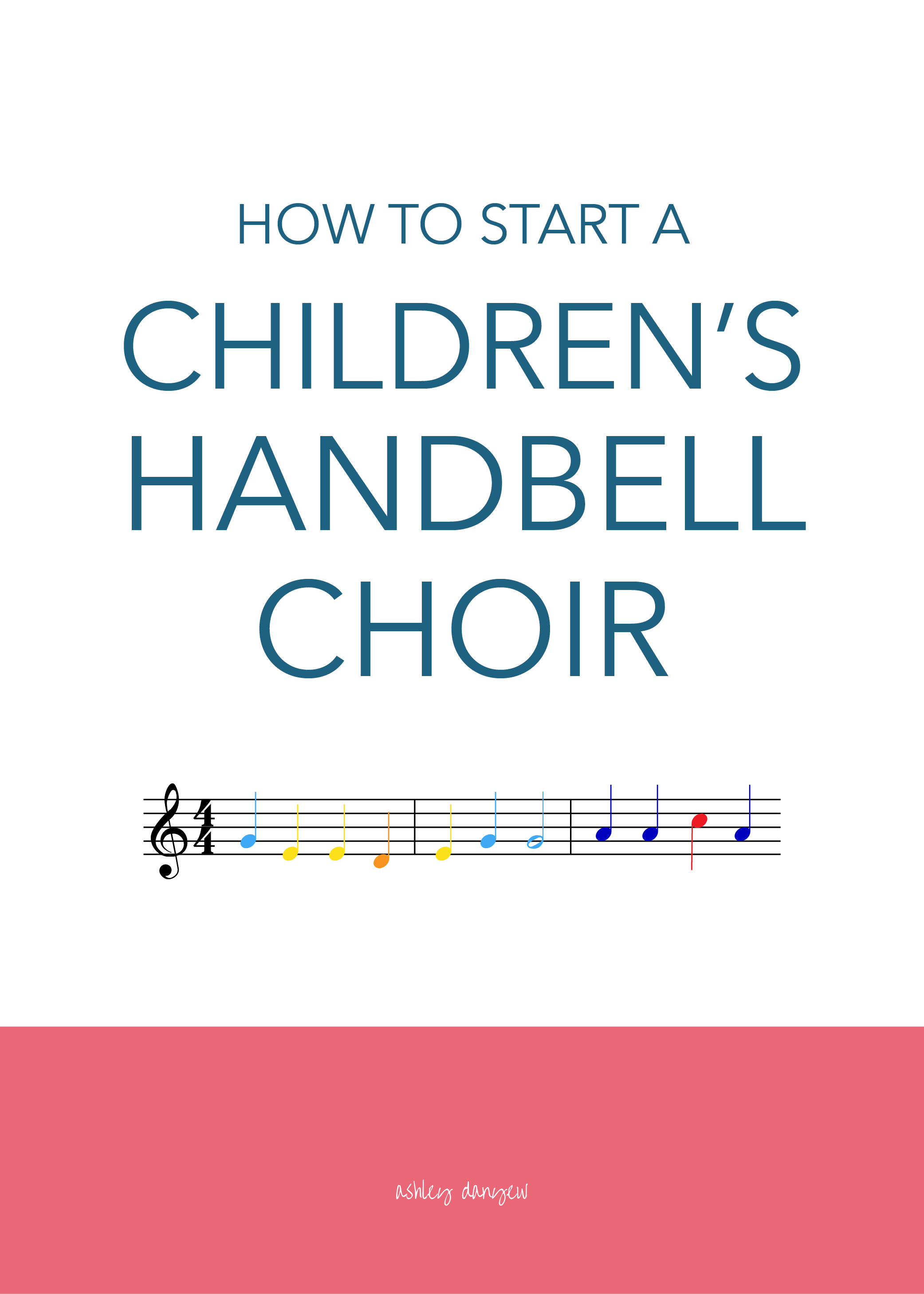
Playing handbells is a great way to foster the development of strong rhythmic skills, physical coordination, and listening skills. It's also an effective way to teach the basics of music-reading (direction, reading lines and spaces) and provide young children with an active way to play and make music together. Yes, young children! With color-coded metal handbells, children as young as preschool-age can play handbells.
Each bell/note is a different color and music notation is often color-coded to match. Some music features colored note values (e.g. red for Middle C). Others use colored letter names or a picture of the colored bell with the letter name inside.
Looking to start a children's handbell choir at your church? Here are some of my favorite products, resources, and teaching aids. Happy ringing!

I'm Ashley—musician, educator, writer, and entrepreneur. Here, I share creative ideas and practical resources to help you build a successful career as a musician and teacher. Learn more >>

ONLINE COURSES
Develop the skills you need to lead and teach creatively and confidently with mini online training courses and workshops designed specifically for church musicians & music educators. Learn more and enroll >>

Get monthly updates
Get my free, 7-min. monthly newsletter—loved by 23,476+ musicians & educators. Subscribe >>

Listen to the podcast
Practical and pedagogical strategies, teaching
reflections, and insights from the field of music teaching and learning. Listen and subscribe >>

Printable Sheet MUSIC
Original music compositions for handbells, unison/2-part and
SATB choirs, solo piano & chamber instrumental ensembles. Buy now >>

Resource Library
A collection of printables, templates, and workbooks for music educators, piano
teachers, church musicians, and
music entrepreneurs. Browse the library >>