Piano Teaching

Fixed and Growth Mindsets (What I Learned from Carol Dweck's Book)

Fixed and Growth Mindsets (What I Learned from Carol Dweck's Book)

I first heard about this book from one of my grad school professors.

We were sitting around a long table one snowy January evening at our annual dinner for current and prospective doctoral students. I asked my professor about books he was reading lately and he named several including Malcolm Gladwell's Outliers and Carol Dweck's Mindset.

A Holiday Wishlist for Music Teachers

A Holiday Wishlist for Music Teachers

What would you ask for if you were making a holiday wishlist for yourself as a teacher? New music? Curriculum resources? Piano-teaching games?

Today, I’m sharing a few ideas (and a few things that are on my teacher wishlist!) to help get you started. Enjoy!

10 Supplemental Collections for Intermediate Piano Students

10 Supplemental Collections for Intermediate Piano Students

How can we as teachers add variety and musical interest to their repertoire lists? How can we include more diversity in the composers we choose and the musical styles we teach?

A few weeks ago, I wrote a post with 15 supplemental collections for elementary piano students. Today, I’m sharing my favorites for intermediate students.

15 Supplemental Collections for Elementary Piano Students

Supplemental collections are a great way to 1) incorporate a variety of musical styles into their repertoire plan, 2) expose your students to new voices (especially those who are underrepresented), and 3) foster motivation. Here are 15 of my favorite collections for elementary piano students.

How to Use Milanote as a Music Educator

How to Use Milanote as a Music Educator

I’m always looking for tools that are simple and easy to use. That’s why today, I’m excited to tell you about a (free!) web-based tool I’ve discovered to help me organize ideas, plan lessons, track assessments, and write curriculum content.

How to Use Notability for Assignment Sheets in Your Studio

How to Use Notability for Assignment Sheets in Your Studio

Confession: I’ve always struggled with written assignment sheets.

I know they’re important for home practice, but what about when a student doesn’t take their assignment notebook out of their bag all week? I wanted to find a better solution.

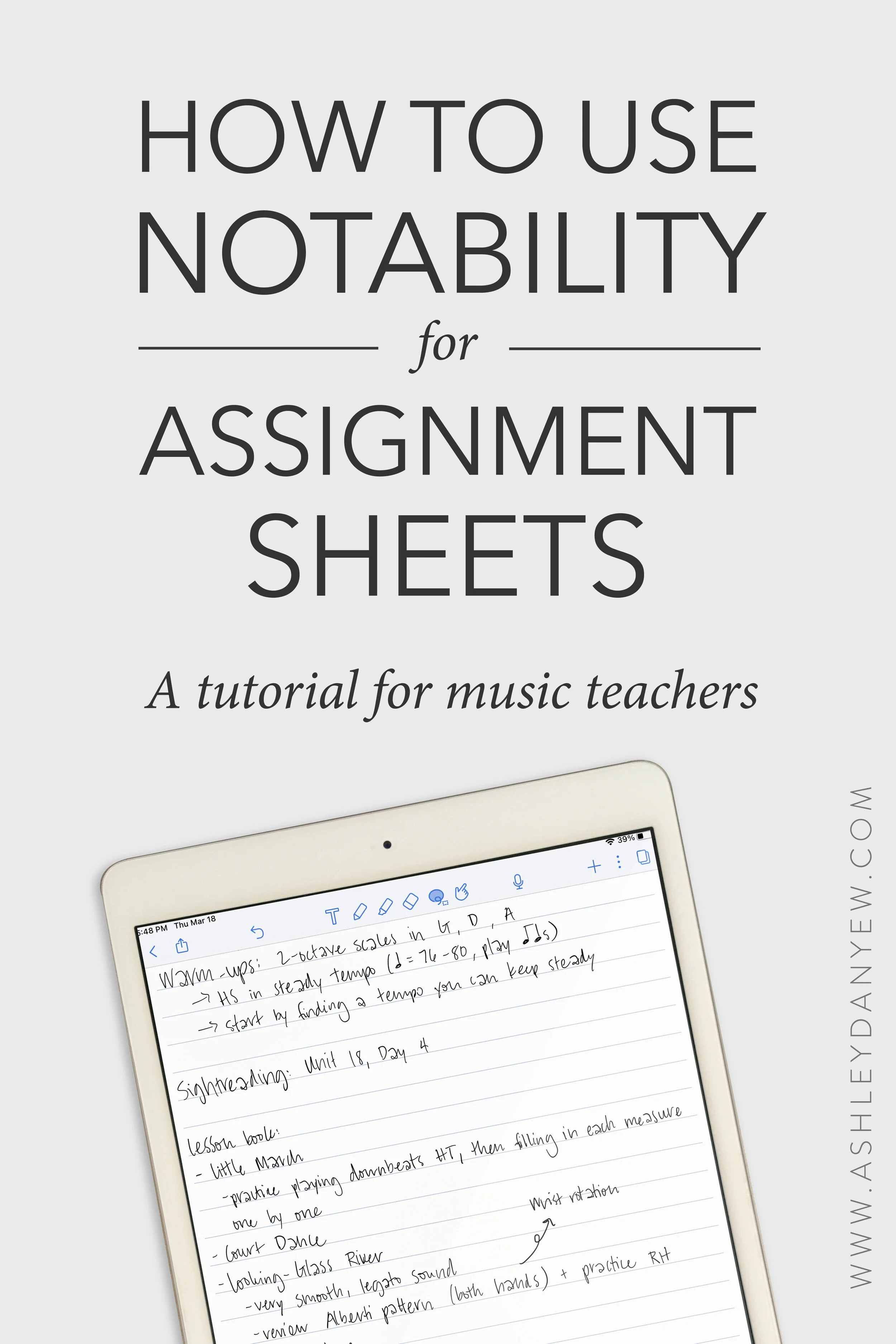
Looking for an alternative to handwritten assignment sheets in your studio? Here’s an easy 5-step guide to using Notability.

Five Creative Incentive Programs for Your Studio

Five Creative Incentive Programs for Your Studio

Have you ever used an incentive program in your music studio?

This might be a month-long practicing challenge, an annual assessment period, or a summer music camp (or other break-week).

This is a great way to keep momentum in the studio, encourage good practicing habits leading up to our end-of-year recital, and assess where my students are in all facets of their musicianship.

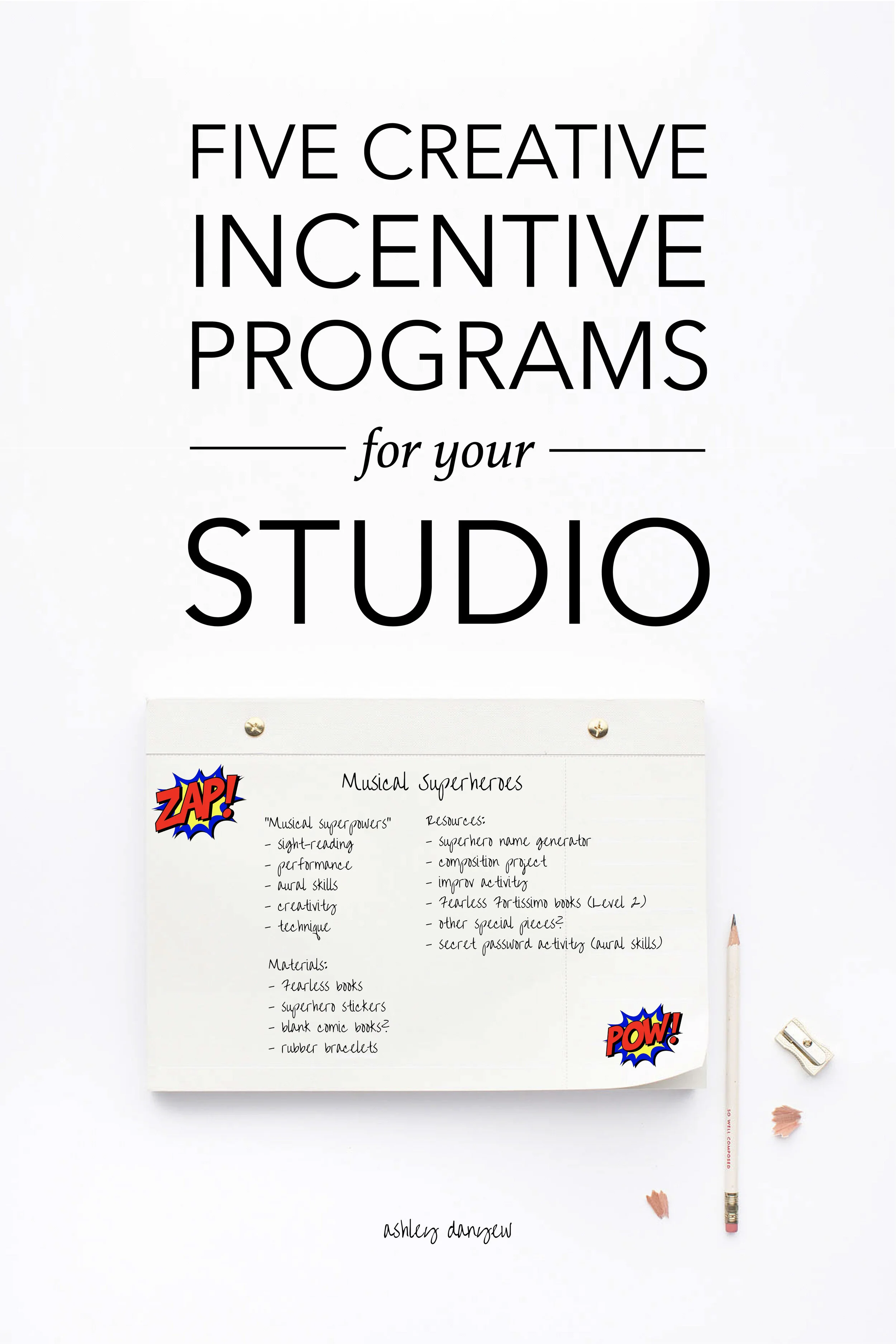
Looking for a fun, creative theme for your next studio incentive program? Here are five to consider.

How to Host an Online Piano Recital

How to Host an Online Piano Recital

Every year in my studio, we celebrate the end of the school year with a spring recital.

Each student prepares two pieces — sometimes memorized, sometimes with duets played by me or a parent or an older sibling or even a friend in the studio, and always with lots of supportive friends and family members in the audience.

This spring, like teachers around the world, I found myself suddenly immersed in the world of online teaching.

I knew that instead of gathering in person in the school theater on a Saturday morning in late May, we’d need to find another way to celebrate this year. We’d need to find a way to move the recital (like everything else in life) online.

How to Teach Music Lessons Online (+ Inside My Home Teaching Studio)

How to Teach Music Lessons Online (+ Inside My Home Teaching Studio)

A few weeks ago, I made the decision to keep my studio virtual this year.

Some schools are reopening here (with lots of precautions, staggered starts, alternating live and virtual days, etc.), including the school where I normally teach. I spent a lot of time this summer thinking about the in-person lesson experience and what that might look like:

How to Teach a Virtual Studio Class

How to Teach a Virtual Studio Class

A few years ago, I started teaching monthly group classes in my studio.

The idea was to include more opportunities for informal performance, observation, musical discussion, and developing musicianship skills in a supportive group environment. All students are invited and encouraged to play something each time, even just part of a piece.

This gives us an opportunity to:

  • show works in progress

  • talk about practicing, learning processes, challenges, and rewards

  • give feedback (positive + constructive)

I also plan a few musical games and activities related to listening, movement, creative musicianship, and composition — things we can’t really do in our one-on-one lessons.

This year, I planned to teach five studio classes specifically for 3rd-6th graders, two studio classes for 7th-12th graders, and monthly buddy lessons for my K-2nd grade students.

But what to do when the world shuts down and everything moves online?

Host a Zoom studio class, of course.

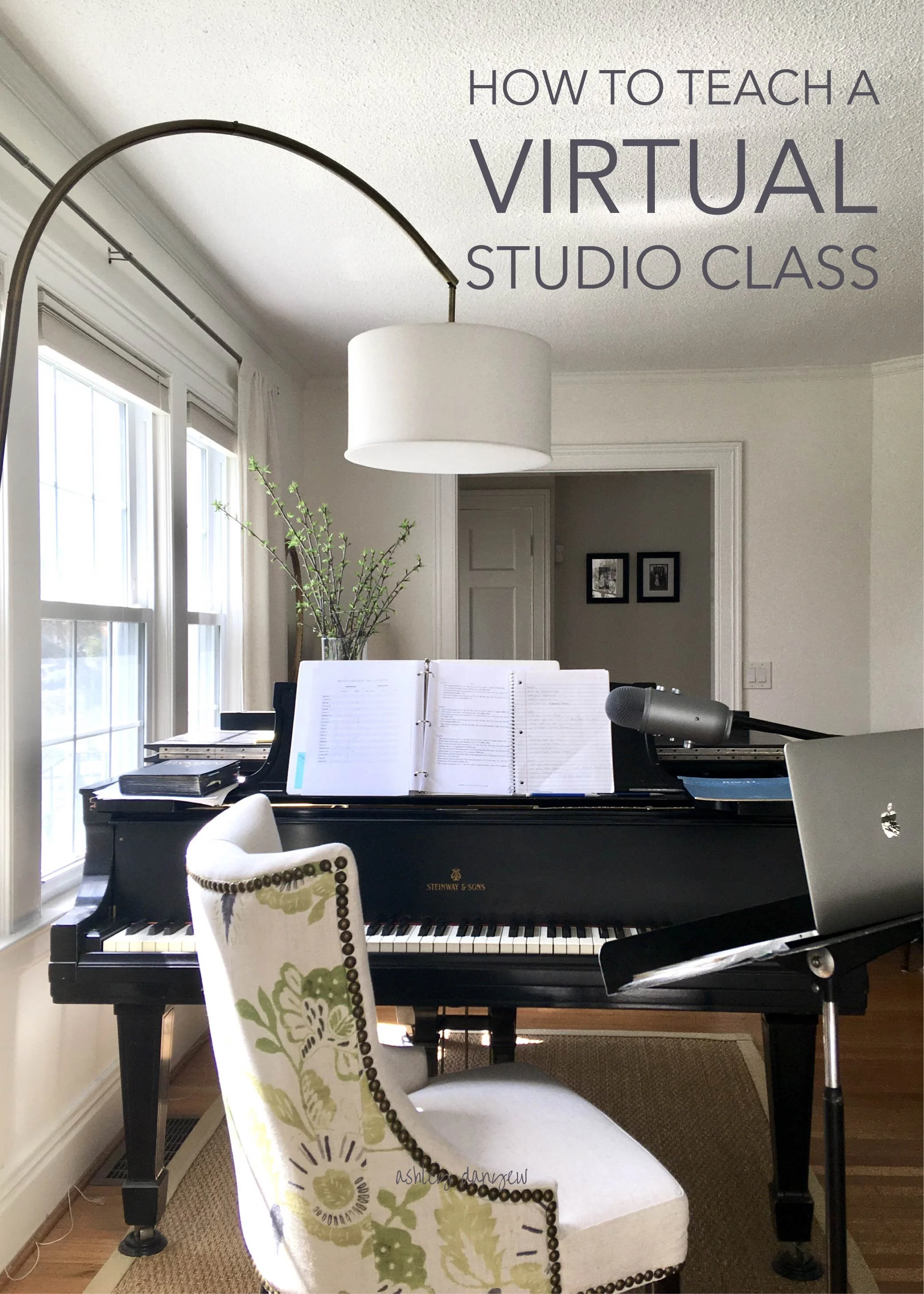
Last week, I taught two studio classes (3rd-6th grade and 7th-12th grade) and two buddy lessons (K-2nd grade). Here’s a behind-the-scenes look at how I set these up, how I structured our time together, and what activities I created to play virtually.