

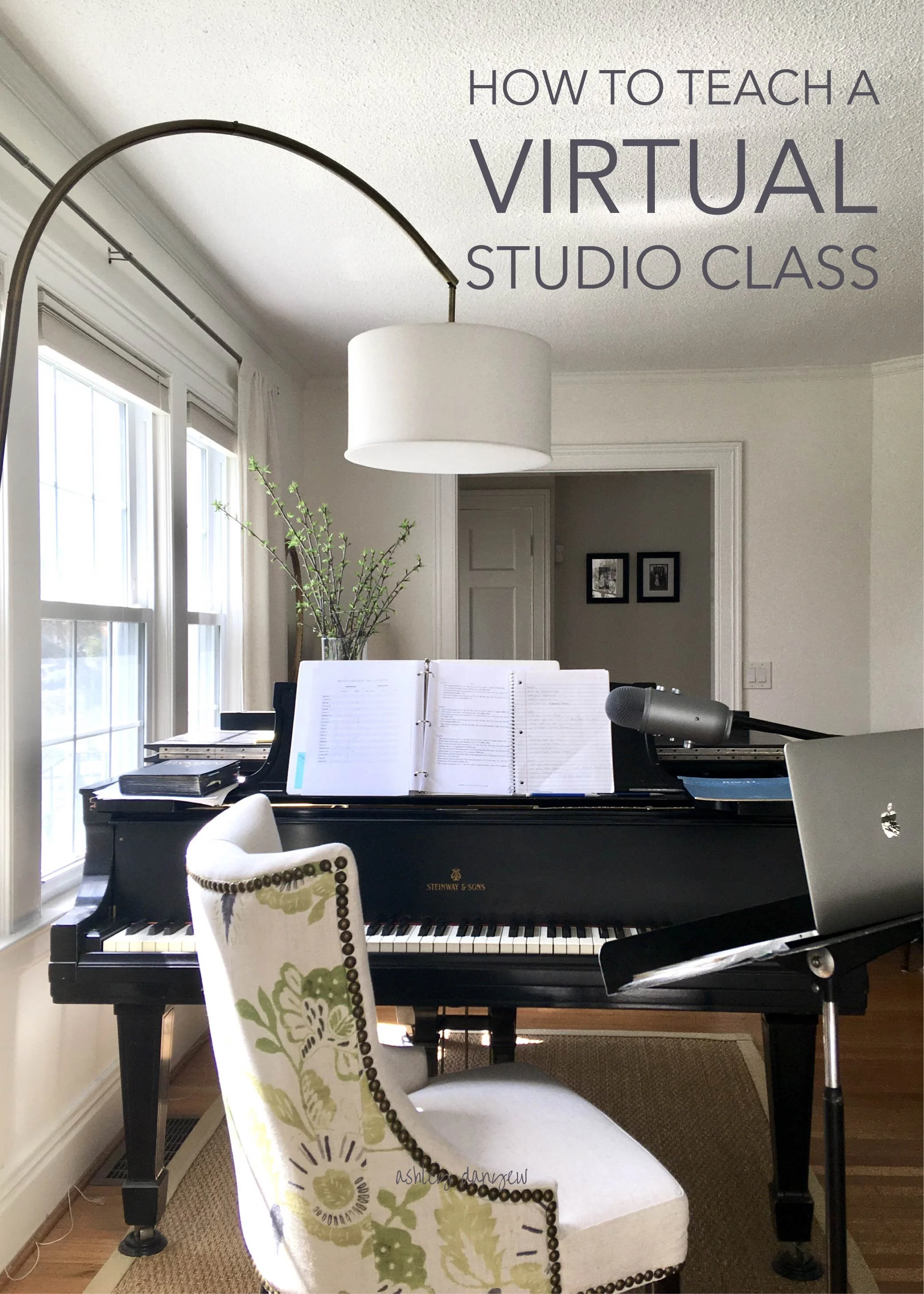
How to Teach a Virtual Studio Class
A few years ago, I started teaching monthly group classes in my studio.
The idea was to include more opportunities for informal performance, observation, musical discussion, and developing musicianship skills in a supportive group environment. All students are invited and encouraged to play something each time, even just part of a piece.
This gives us an opportunity to:
show works in progress
talk about practicing, learning processes, challenges, and rewards
give feedback (positive + constructive)
I also plan a few musical games and activities related to listening, movement, creative musicianship, and composition — things we can’t really do in our one-on-one lessons.
This year, I planned to teach five studio classes specifically for 3rd-6th graders, two studio classes for 7th-12th graders, and monthly buddy lessons for my K-2nd grade students.
But what to do when the world shuts down and everything moves online?
Host a Zoom studio class, of course.
Last week, I taught two studio classes (3rd-6th grade and 7th-12th grade) and two buddy lessons (K-2nd grade). Here’s a behind-the-scenes look at how I set these up, how I structured our time together, and what activities I created to play virtually.
22 Creative Ideas for Teaching Music Online (for All Ages)
Like many of you, I’ve been thinking a lot about how to teach music creatively online these past few weeks.
What tools work best to facilitate connection, dialogue, and musical experience?
What strategies lend themselves best to online teaching?
What assignments will foster music-learning during this time?
As many of us are navigating this new territory of learning how to teach online due to the COVID-19 pandemic, I thought I’d put together a master list of ideas for teaching in a variety of settings: church music, community teaching, and K-12 music.
I’m also including a list of tech tools that I’m using personally, have used in the past, or have heard recommended from other music teachers in the field.
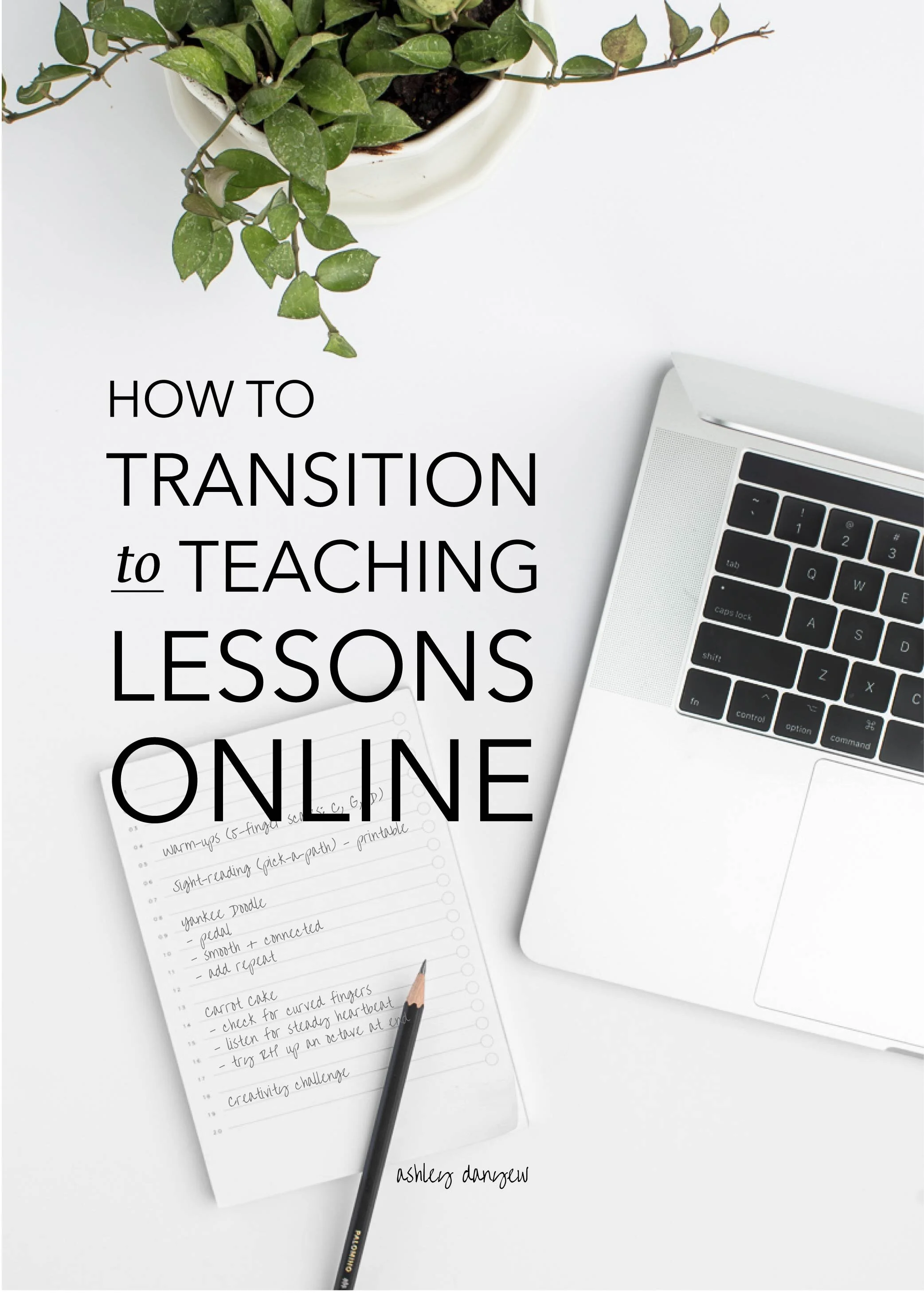
How to Transition to Teaching Lessons Online (Due to COVID-19)
We’re living in unprecedented times.
With the recent worldwide outbreak of COVID-19, more and more schools and studios are choosing to close and transition to remote learning.
Maybe you’re like me in thinking that some subjects lend themselves well to being taught online: history, language, math. But music? How do you teaching piano to a 1st grader online? How do you teach choir or band? How do you teach group lessons?
This week, numerous music educators have put together resources, kits, and teaching guides to help others transition to online learning, learn about tools that are available, and get ideas. There are Facebook groups and webinars, blog posts and Google Docs summarizing all the music-related tech tools that are offering special discounts right now.
Here in Rochester, NY, schools are closed and moving online until further notice.
As such, I’m transitioning my studio to online learning. Today, I want to share what that looks like, including:
The notes I’m sending home to parents
Three models for online education I’m offering to all my students (K-10th grade)
Steps I’m taking to plan and prepare for this change
Resources and printables I’m pulling together for the next few weeks
Tools I’m using on the tech side of things
My best recommendations for studio teachers in this situation

Five Teaching & Learning Myths to Debunk This Year
You know those things you’ve heard that seem true? I mean, they sound plausible. Plus, if enough people say it, it must be true, right?
Before long, we find ourselves buying into the hype, retelling the story, believing something we’ve heard without stopping to ask questions.
This is how myths begin.
Sometimes, there’s simply a lack of information—nothing to disprove this theory or that idea. Other times, they sound good on paper but are only surface-level with no substance to back them up.
Whatever the case may be, we’ve all encountered myths (big and small) in various parts of our lives.
But have you ever stopped to think about myths related to teaching and learning? What stories are being told out there that affect our work and how we approach things? What’s being shared as fact when there isn’t research to back it up?

Do We Really Teach How We Were Taught? Three Things You Should Know
Do you ever think back to the teachers you had growing up?
Maybe a private music teacher or a choir director or your high school English teacher or a professor you had in college.
What do you remember about them? What was your learning experience like? What approaches did you observe? What do you find yourself incorporating into your own teaching?
There’s an age-old adage that says we teach how we were taught.
This isn’t the full story, of course: we all have unique backgrounds and a variety of experiences that inform the people we are today and the teachers we are becoming.

10 Ways to Help Your Child Practice
This is a letter to all the parents and guardians and babysitters and older siblings and neighbors and friends who support young musicians: those who encourage the pursuit of music, tote children and books and accessories back and forth to lessons each week, and help with practicing at home.
Dear parents + guardians:
Thank you for supporting your child’s musical pursuits. You play a crucial role in your child’s success in learning to play an instrument. Even if you don't play the piano yourself, your support and guidance at home during the week is extremely important to their music-learning process.

How to Create a Repertoire Plan Using the RCM Piano Syllabus
A few summers ago, I attended the National Conference on Keyboard Pedagogy (NCKP) for the first time (read my recaps here, here, and here).
In addition to a wealth of new teaching ideas, I learned about new methods and curriculum materials, some of which I’ve been using in my teaching ever since.
Perhaps the most influential and valuable resource I discovered at NCKP was the Royal Conservatory of Music (RCM—Canadian division) and Music Development Program (MDP - US division).
Founded with a commitment to developing strong musicianship skills from the very beginning, the program includes level-by-level guides to repertoire, technique, and musicianship skills (plus supplemental materials for music history and theory) for a variety of different instruments.

An Inside Look at My Superhero-Themed Studio Incentive Program
Every year, I plan and create a 6-8 week incentive program for my piano studio. Mostly, this is for my beginning and elementary students (through 5th grade), though my middle schoolers (6th-8th grade) have been known to join in!
I’ve been doing this for a few years now, and I’ve found, while it's a great way to mix up our weekly lesson routine and give my students something fun to look forward to each week, it’s also a helpful way for me to assess their musicianship skills, take time to recognize their musical growth, and really tailor my instruction to each student.

Celebrate Valentine's Day with These Fun, Creative Music Games
Valentine’s Day is right around the corner!
Now, I know what some of you are probably thinking: Valentine’s Day isn’t a real holiday! Why should we “celebrate” this in our lessons and rehearsals?
I’m inclined to agree that Valentine’s Day is basically a Hallmark holiday, but at this point in the year, I’ll take pretty much any excuse to mix up my regular teaching routine and introduce something a little whimsical and fun (especially when gummy candy is involved!).

Let's Get Back to the Basics: A Free 5-Day Workshop for Church Musicians & Music Educators
It’s the first week of the New Year and let me guess:
You’re looking back at 2018 and feeling a little worn out. You feel scattered. Your teaching approach feels haphazard and reactionary, and you wish you’d been a little more consistent these past few months.
You want 2019 to be different, but you’re not sure where to start.
You want to be the best teacher you can be, but taking on the task of improving your teaching skills is daunting. You’re not sure what to change or do differently.
Can you relate to that?

I'm Ashley—musician, educator, writer, and entrepreneur. Here, I share creative ideas and practical resources to help you build a successful career as a musician and teacher. Learn more >>

ONLINE COURSES
Develop the skills you need to lead and teach creatively and confidently with mini online training courses and workshops designed specifically for church musicians & music educators. Learn more and enroll >>

Get monthly updates
Get my free, 7-min. monthly newsletter—loved by 23,476+ musicians & educators. Subscribe >>
Listen to the podcast
Practical and pedagogical strategies, teaching
reflections, and insights from the field of music teaching and learning. Listen and subscribe >>

Printable Sheet MUSIC
Original music compositions for handbells, unison/2-part and
SATB choirs, solo piano & chamber instrumental ensembles. Buy now >>

Resource Library
A collection of printables, templates, and workbooks for music educators, piano
teachers, church musicians, and
music entrepreneurs. Browse the library >>