Bach and How to Conduct Tiny Experiments
Disclosure: Some of the links in this post are affiliate links, which means if you decide to purchase through any of them, I will earn a small commission. Thank you for your support!
September 2026Science was never my favorite subject.
I didn’t understand the purpose of a hypothesis (isn’t it just a guess?!), and following a complex set of steps to get to an undetermined outcome didn’t quite make sense to me. Maybe it was the uncertainty, the willingness to be wrong, or the ambiguity of what you may or may not discover.
But as a teacher, I’ve grown to recognize the value of this process. The importance of experimenting, trying things without expectation, making observations, and documenting the process without knowing where it might lead.
I just finished reading Tiny Experiments by Anne-Laure Le Cunff. Her work focuses on the neuroscience of curiosity, and she describes the book as “a practical guide on how to live a more experimental life.” The method is simple:
Make a pact—a Purposeful, Actionable, Continuous, and Trackable commitment to something you’re curious about or want to learn.
Then, use this formula: "I will [do X action] for [Y duration].”
After reading this, I realized I’ve been conducting my own tiny experiment this year without knowing it.
It started with an aspiration: “I want to get back into regular practicing,” I said to Steve one day last summer. “But without a performance commitment, it’s hard to justify the time. What’s the point?” “There doesn’t need to be a point,” he said simply. “Do it for you. I think you’d enjoy it.”
And so, on September 1 of last year, I committed to practicing for 30 minutes each weekday.
But what would I play? Almost immediately, I thought of Bach’s Well-Tempered Clavier. I played a few of the preludes and fugues from Book 1 in high school and maybe the beginning of college, but there were many I’d never learned. Some of the fugues were intimidating as I flipped through my score (the Willard Palmer edition)—certainly not something I could sit down and sight-read my way through. I decided to challenge myself to learn one prelude and fugue each month, in order. I also decided to record them at the end of the month; not to post or share, necessarily, but as a way of documenting the project.
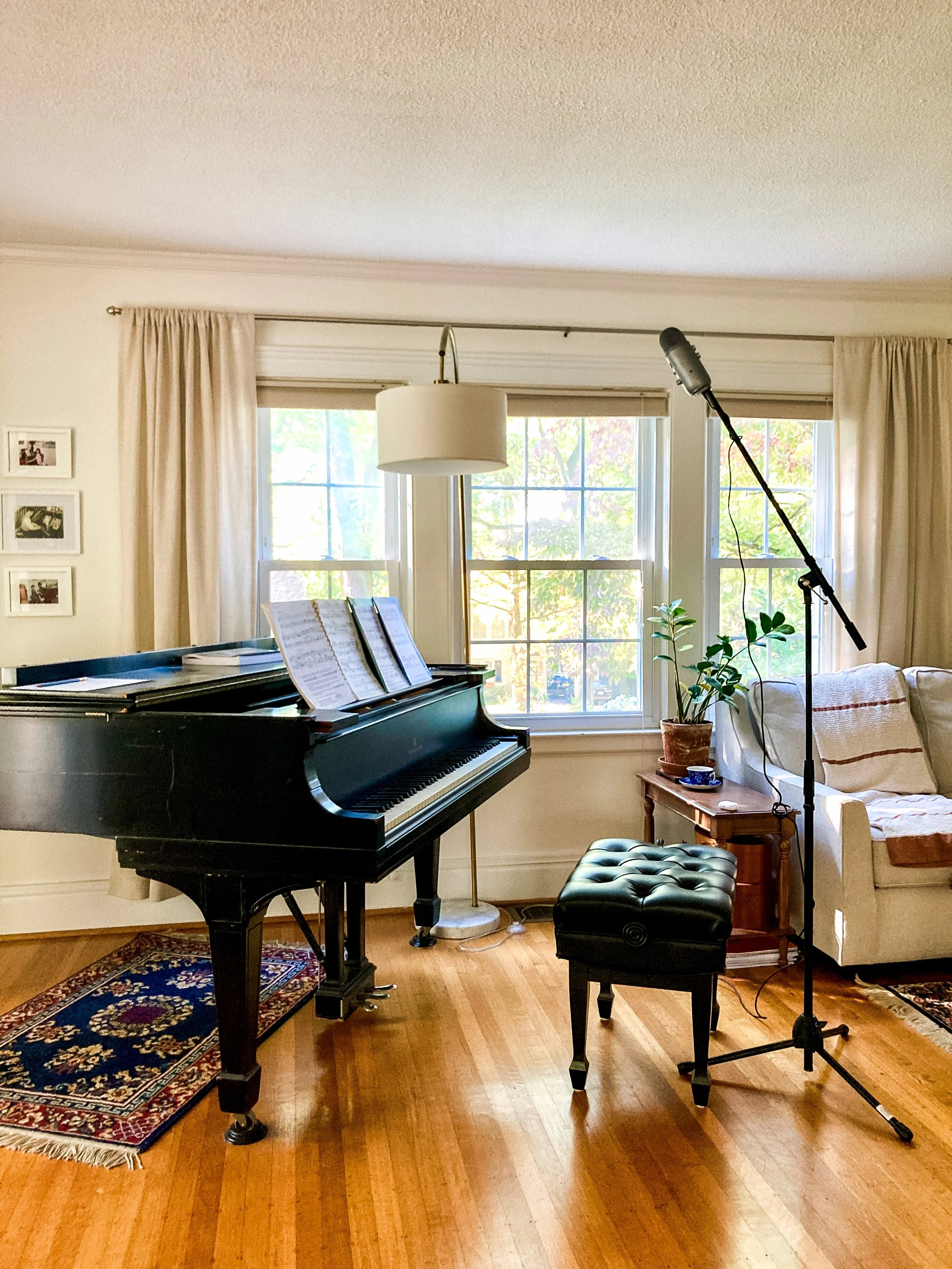
One year later, I’ve studied, learned, and recorded 12 preludes and fugues. On the podcast this month, I’m sharing my field notes on this year-long Bach experiment—how I’m practicing, what I’m learning, and a few recordings made in my living room.
Le Cunff writes, “Success is the lifelong experiment of discovering what makes you feel most alive.” What does that look like for you in this season?