
099 - My Bach Year
Resources Mentioned
*Disclosure: some of the links in this episode are affiliate links, which means if you decide to purchase through any of them, I will earn a small commission. This helps support the podcast and allows me to continue creating free content. Thank you for your support!
Well-Tempered Clavier, Book 1 (J.S. Bach)
Tiny Experiments: How to Live Freely in a Goal-Obsessed World (Anne-Laure Le Cunff)
The Art of Practicing (Madeline Bruser)
Learn Faster, Perform Better (Molly Gebrian)
Bach’s Musical Universe: The Composer and His Work (Christoph Wolff)
It started with an aspiration: “I want to get back into regular practicing,” I said to Steve one day. “But without a performance commitment, it’s hard to justify the time. What’s the point?” “There doesn’t need to be a point,” he said simply. “Do it for you. I think you’d enjoy it.”
In that moment, I gave myself permission to start: A recommitment, a new routine, an artistic practice.
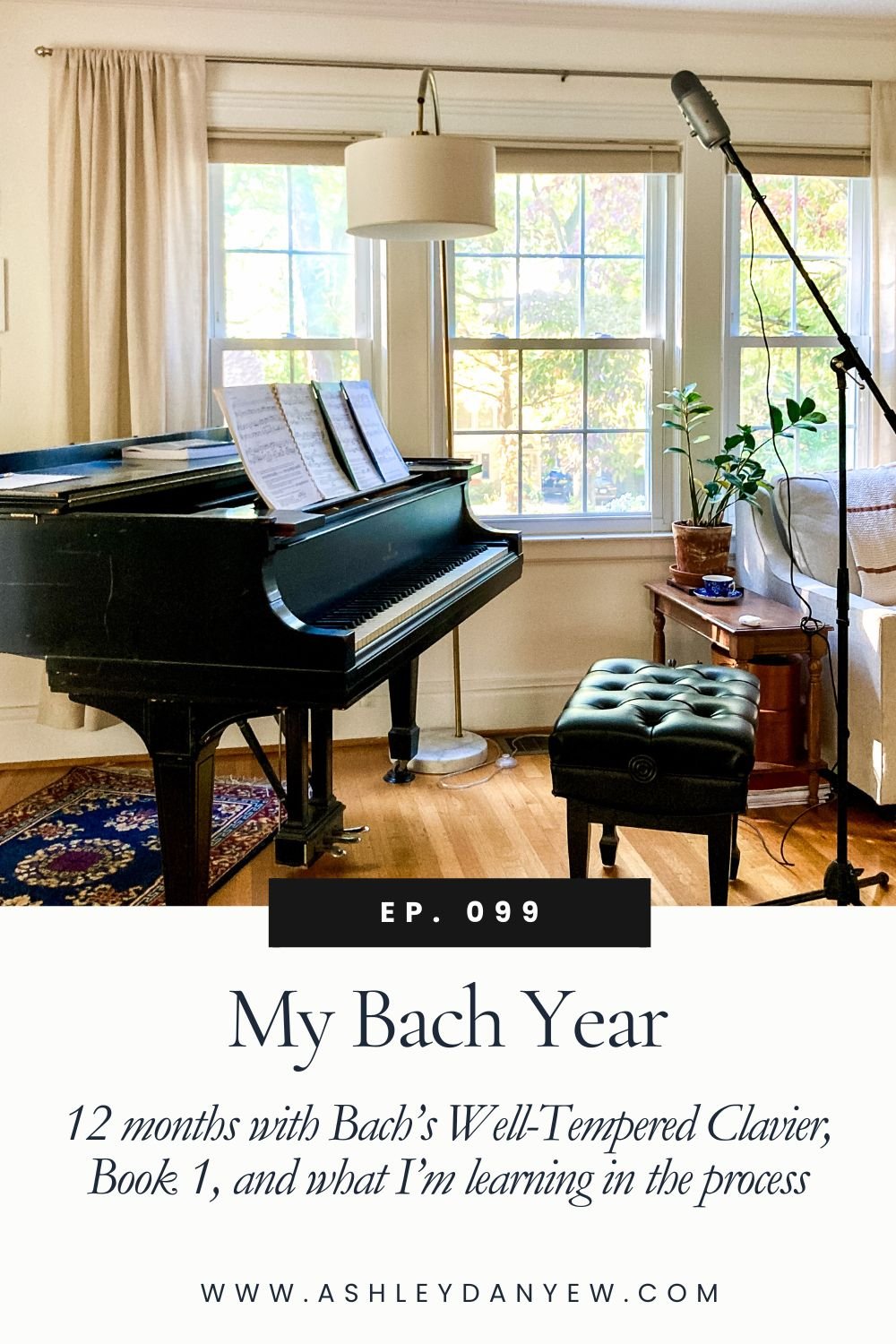
But what would I play? Almost immediately, I thought of Bach’s Well-Tempered Clavier. I played a few of the preludes and fugues from Book 1 in high school and maybe the beginning of college, but there were many I’d never learned. Some of the fugues were intimidating as I flipped through my score (the Willard Palmer edition)—certainly not something I could sit down and sight-read my way through. I decided to challenge myself to learn one prelude and fugue each month, in order. I also decided to record them at the end of the month; not to post or share, necessarily, but as a way of documenting the project.
On September 1 of last year, I committed to practicing for 30 minutes each weekday. I practice in the morning, before starting work for the day. I begin with a technical routine loosely based on one Marvin Blickenstaff shared years ago:
A rotation exercise, major-minor-diminished, in all keys
Roll-around in contrary motion, in all keys
A Hanon exercise, which varies by day, two octaves, in C or multiple keys
4-octave scales, in all keys
A trill preparation exercise, in all keys
This takes me about six minutes to complete. Sometimes, I add in chord progressions in keyboard style, broken octave scales, or arpeggios. I spend the rest of the time working on the prelude and fugue. Most days, I get to both, but some days, I focus solely on one or the other.
I’m sharing all this because I think it’s important to talk about the process of learning and to make it more visible. I’ve been reading the book Tiny Experiments by Anne-Laure Le Cunff. She advocates for replacing long-term goals with pacts—a purposeful, actionable, continuous, and trackable commitment to something you’re curious about or want to learn.
She also notes the importance of learning in public. In Ancient Greece, learning took place in central squares—public forums for lectures, debate, performance, presentation, and critique. It was active and social and shared. We’ve lost some of this through the centuries, but there are still ways to recreate it in our modern world.
One way is to learn in public. To share your experiments, your intentions, your curiosities. To talk about what you’re learning as you’re learning it. That’s what this podcast is all about—sharing field notes, reflections, and observations about the questions I’m asking, things I’m learning, teaching strategies I’m trying, and things I’m curious about.
Consider this episode my field notes on my year-long Bach experiment.
Turning the Bach Project Into an Immersive Experience
I didn’t know if it would be enough time.
Thirty minutes a day, minus the six minutes I spend on technique, means two hours a week, or eight hours of Bach work in a standard month, including recording. Some are three pages, others are five pages, and complexity and difficulty vary.
It’s interesting to see how the work fills the time I’ve allotted for it. Every month, I’ve found ways to rise to the occasion, despite holidays, travel, and sick days. Sometimes, that’s meant practicing on weekend days as make-ups if I was traveling during the week. Last month, I threw out my back and couldn’t sit at the piano, so I spent two days of practice just listening to recordings and studying the scores. I’ve maintained a consistent schedule and recorded a prelude and fugue at the end of every month for 12 consecutive months now.
But of course, this project and my learning go beyond the 30 minutes I’m sitting at the piano each day.
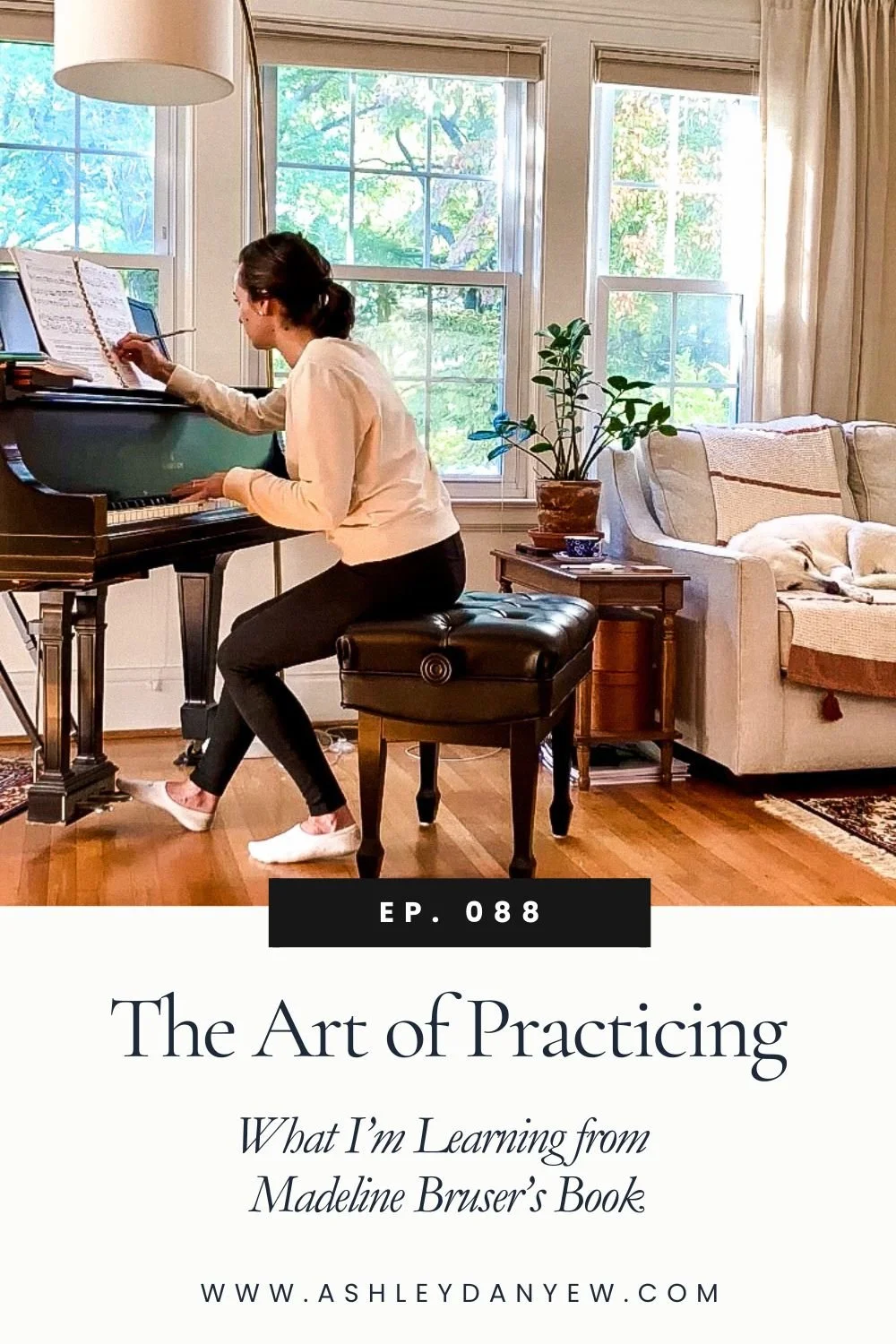
During the first month of this practice, I read Madeline Bruser’s The Art of Practicing, which I talked about in Episode 088.
I listened to Angela Hewitt recordings while painting and getting ready in the morning.
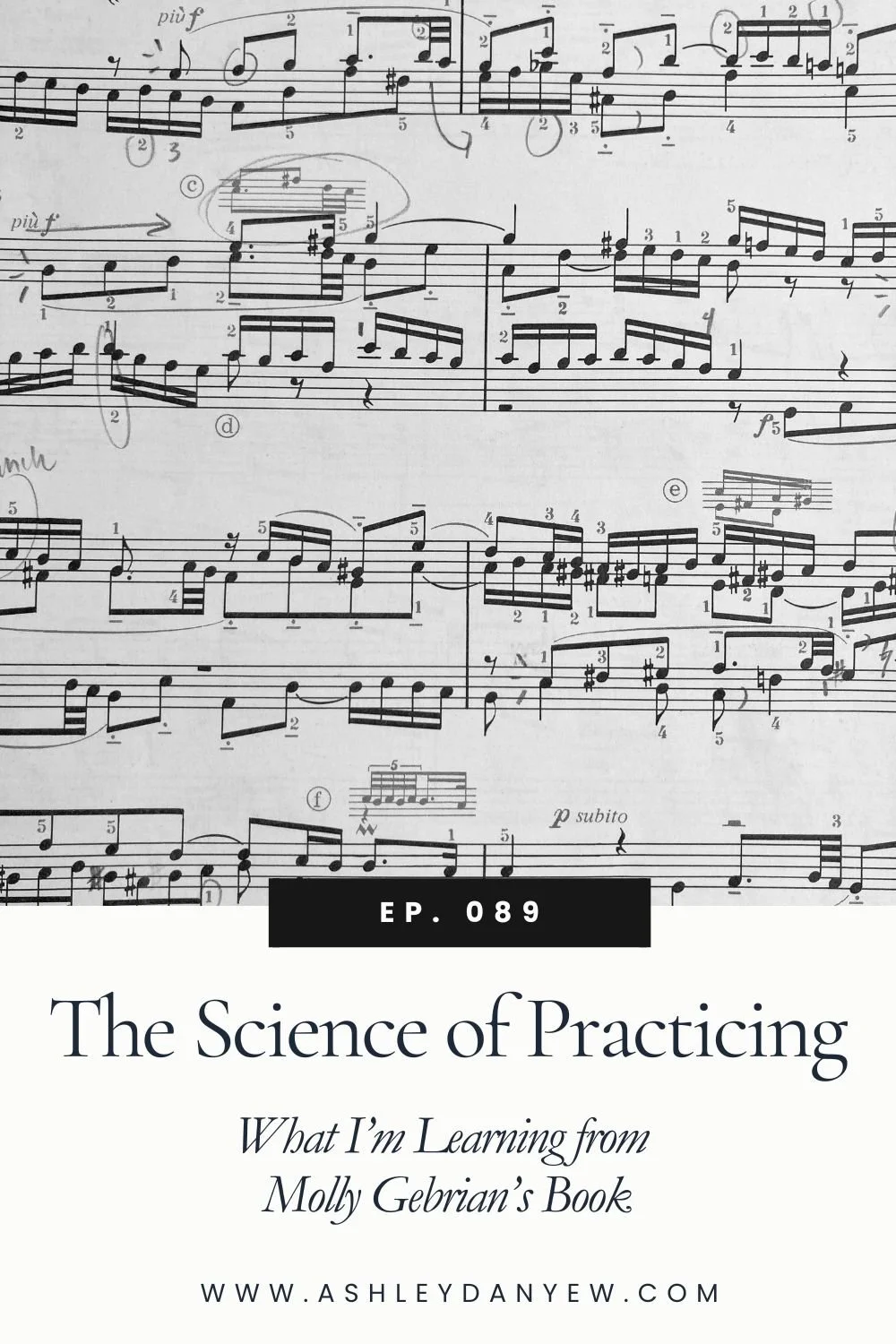
I chose Molly Gebrian’s Learn Faster, Perform Better for the Musician & Co. Book Club, which I talked about in Episode 089.
I wrote two essays about Bach for my newsletter: Holding On and Letting Go (Fugue No. 4) and When Two Things Are True At Once (Prelude No. 8).
This summer, I read Christoph Wolff’s Bach’s Musical Universe.
Bach has permeated my reading, writing, listening, and conversations this year, which has made the experience all the richer.
I learned from Wolff’s book that Bach included the Well-Tempered Clavier in a portfolio when applying for the position of Leipzig cantorate in 1722. This position included providing music for the four city churches in Leipzig (the period when he wrote, rehearsed, and performed a new cantata every week) and choral and instrumental teaching responsibilities at St. Thomas School. This was a point of professional transition, a chance to introduce himself as an expert teacher and author of novel, innovative, and versatile keyboard works. The portfolio reflected his dedication to scholarship and his experience as a teacher.
On Musical Thinking
Wolff wrote:
“The essential parameters of [Bach’s] personal style were formed by a process of learning ‘how to think musically,’ as Forkel’s 1802 biography related it. The idea of musical thinking revolves . . . around issues of order (Ordnung) in terms of organizing musical material; coherence (Zusammenhang), in the sense of connectivity and continuity of musical thoughts; and proportion (Verhältnis), meaning the relation and correlation of musical elements.”
Order, coherence, and proportion. But I’ve found it’s a study in contrasts: simplicity and complexity, repetition and development, and on a larger scale, the pairing of two very different styles of composition, as Wolff noted: the free, improvisatory prelude and the strict, contrapuntal fugue.
For instance, here’s the beginning of Prelude No. 10, which reminds me of Schubert’s “Gretchen am Spinnrade.” Can you hear the motion of the spinning wheel in the left hand?
And here’s the beginning of Fugue No. 10, which is wild and chaotic—an unraveling:
Wolff summarized:
“If there is one category of musical composition most closely identified with the name of Bach, it is surely fugue—not a specific genre or form per se, but rather a process of imitative polyphony in which, as the Latin term fuga suggests, ‘one voice chases the other.’”
I have found the fugues interesting, challenging, and satisfying to learn and play. I carry them with me throughout the day, the tempo based on the pace of my footsteps on a walk in the woods. The subject for Fugue No. 3 was so unusual and unpredictable that I audiated it and sang it on solfege in the car to and from school.
Practicing Strategies
At the beginning of the year, I started a note in Notion where I document the practice strategies I’m using. In Week 1, I start with:
Sight-reading and marking fingering
Marking the subject entrances in the fugue
Studying the ornamentation and articulation
Listening to recordings and following along in the score
HS practice, especially for the fugue
By Week 2, I get into problem-solving:
Working problem spots/measures/lines, HS and HT
Continuing to mark fingering, as needed
Listening to and/or playing along with recordings, HS
Working backwards (line by line or page by page)
Starting rhythm practice
In Week 3, I focus on piecing together larger sections and marking practice spots:
Piecing together longer phrases/sections
Practicing in rhythms
Comparing multiple recordings
Working backwards (page by page)
Practicing odd/even lines
Marking practice spots with stars
I try to make sure I’m doing at least two full run-throughs of each piece every day for the last 10 days of the month.
In the final week, I add:
Working with the metronome
Playing along with recordings
Reviewing starred practice spots and putting them back in context
Recording
Molly Gebrian’s book gave me new insights into practicing strategies and how to make the most of limited practice time. Documenting my approach has helped me reconnect with the process and with what my students experience.
And I guess that’s one of my greatest learnings so far—how this project has influenced my teaching, my musical thinking: How we study a score and identify contrasts. The creativity involved in choosing practice methods. The importance of listening and doing focused work.
Closing
I’m beginning Year 2 of my Bach experiment. Every morning, you’ll find me at the piano, meeting Bach for a lesson in order, coherence, and proportion. What better way to start the day?








It started with an aspiration: “I want to get back into regular practicing,” I said to Steve one day. “But without a performance commitment, it’s hard to justify the time. What’s the point?” “There doesn’t need to be a point,” he said simply. “Do it for you. I think you’d enjoy it.”
In that moment, I gave myself permission to start: A recommitment, a new routine, an artistic practice.