


Singing Our Faith: The Power of Musical Theology
We gather together on Sunday mornings, in churches old and new. In "Sunday best" and casual attire. In old wooden pews and folding chairs. No matter where or how we worship, we come together for the same reasons - to feed our souls, to shape and strengthen our faith, to be reminded of who God is.
We retell the stories of our faith, we remember God's promises, we claim God's victory over the world, we pray and praise and recite what we believe.
And we can do it all through singing. This is the power of musical theology.
Theology is "the study of the nature of God and religious belief." Musical theology refers to hymns and songs with rich, meaningful text that speaks to who God is and what we believe.

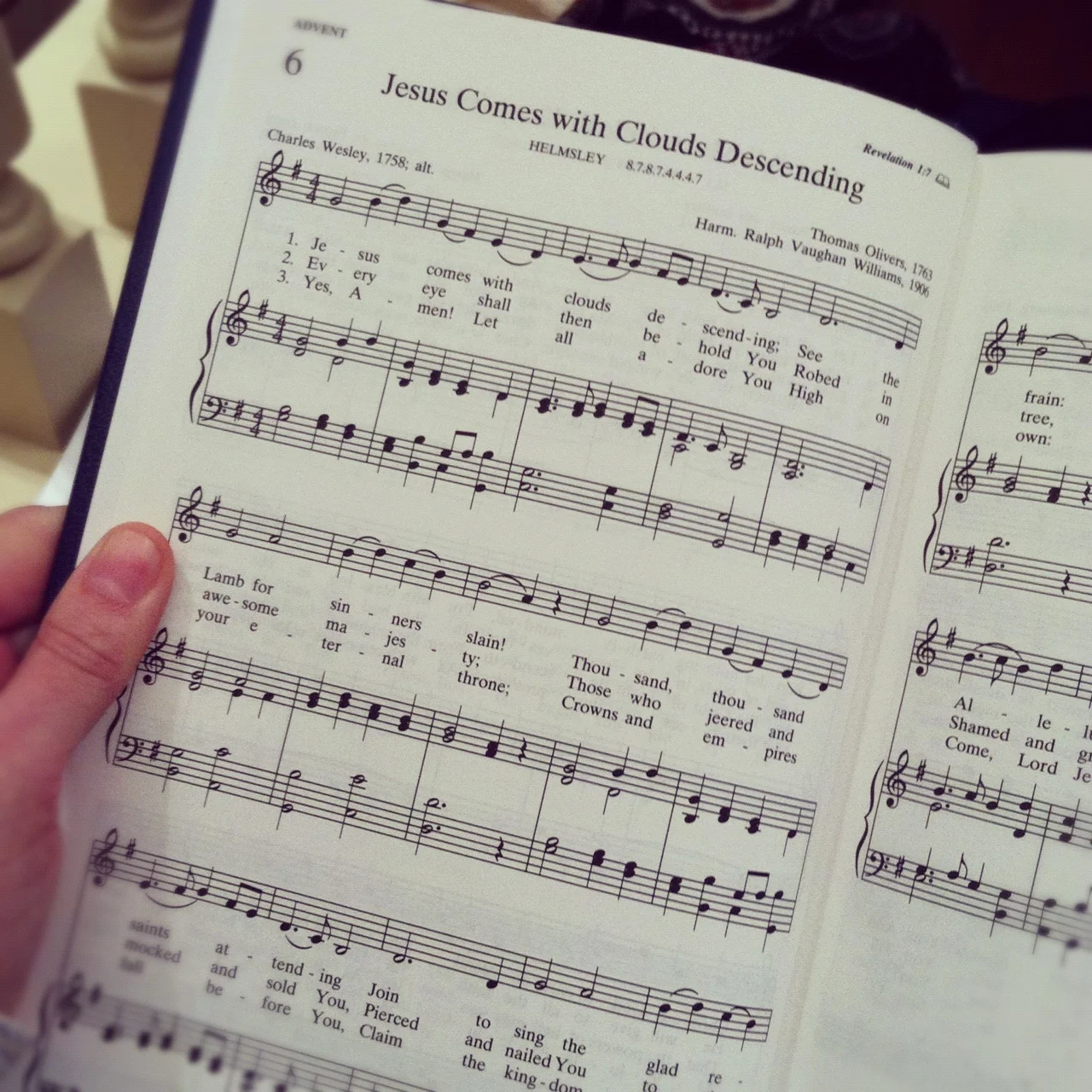
75 Hymns that Teach Musical Concepts
"When we sing a hymn, we are singing history." - Paul Lusher (source)
Hymn-singing is a tradition that spans the centuries, uniting us with believers in the past, present, and future. But I believe hymns are more than historical relics. Here are three primary things I think we can learn from hymns still today:
Church Heritage
There's so much history and tradition embedded in hymns. We carry on a piece of that legacy when we come together for worship and sing the same hymns that others have sung for hundreds of years. And at the same time, we're preserving important parts of music history: "Much of the musical heritage of the church is encountered in hymnology: such forms as plainsong, chorale, psalm tune, and gospel hymn." - Hanna Katja Elina Powell (source)

Contemporary Music for Traditional Congregations
"We need to keep up with the times!""We need to preserve our history!""We need to attract more millenials!"
Contemporary vs. traditional. It's enough to spark debate (or cause a war) in some congregations. But why does it have to be one or the other? Why does including contemporary music mean that we can't have a choir or use the organ or sing hymns? I believe there is a place for both in modern worship.
Emerging in the late 1960s and early 1970s, Contemporary Christian Music (CCM) was influenced by the Rock 'n' Roll of the 1950s and popular styles of the times (source). Today, contemporary worship often refers to musical style (rather than date of composition), incorporating popular song forms (verse, chorus, bridge), style (hip-hop, rock, acoustic, country, etc.), popular instruments (guitar, drums, keyboard, electric bass, etc.), and simple lyrics written in modern language.
The big question is, can all musical styles be considered sacred? Here's what I think:
"Music has sacred significance and purpose within the liturgy whenever it brings sacred associations to the minds and hearts of the worshipers. Does all music have the potential to acquire sacred meaning? Swain (2012) wrote, 'As long as the music is a means of proclaiming the Word and is not the Word itself, it is theoretically possible for any kind of music to acquire a sacred semantic' (p. 196)." - On Musical Meaning

10 Practical Collections for Church Organists
Earlier this week, I shared some of my all-time favorite church music collections for piano. Today, I'm adding to that with a list for organ! These collections are particularly well-suited for new organists, or those of you may not have played for a while and are looking for a way to ease back into all-out, full-pedal-work playing. As someone who's getting back on the bench this year after a few years away, I'm with you! These are some of my go-to resources right now:
1. Five Preludes on Familiar Hymns (Hopson)
Accessible writing makes this book a must-have. Five hymn preludes you can pull out and play with little preparation!
2. Baroque Music for Manuals #1 (Wolff)
A great series of books with a wide variety of (Classical) music (with optional pedal). Great for weddings or service music.
12 Favorite Supplemental Piano Books for Elementary Students
I love choosing supplemental repertoire for my students - even those who are still pretty new to reading and playing. I make recommendations to parents based on the student's interests and try to find supplemental books that complement the other music they are learning.
It can be challenging sometimes to find repertoire that is appealing, musical, and still at an accessible level, but I've found a few great collections that I go back to again and again.
Grab a cup of coffee and your favorite notebook - here are a few of my favorite supplemental books for elementary students:
1. Celebrated Lyrical Solos, Book 1 (Vandall)
2. Celebrated Piano Solos, Book 1 (Vandall)
3. Piano Etudes - Preparatory (Snell)

Introducing Doxology Press!
Dear friends,
Earlier this summer, I started working on a fun new business venture. I am so excited to finally introduce to you, Doxology Press! This shop is a little piece of my heart - it combines my love of hymns and hymn texts with my love of paper and calligraphy. I designed these prints so that the sweet words of these beautiful old hymns can live on in our hearts and homes.

I'm Ashley—musician, educator, writer, and entrepreneur. Here, I share creative ideas and practical resources to help you build a successful career as a musician and teacher. Learn more >>

ONLINE COURSES
Develop the skills you need to lead and teach creatively and confidently with mini online training courses and workshops designed specifically for church musicians & music educators. Learn more and enroll >>

Get monthly updates
Get my free, 7-min. monthly newsletter—loved by 23,476+ musicians & educators. Subscribe >>

Listen to the podcast
Practical and pedagogical strategies, teaching
reflections, and insights from the field of music teaching and learning. Listen and subscribe >>

Printable Sheet MUSIC
Original music compositions for handbells, unison/2-part and
SATB choirs, solo piano & chamber instrumental ensembles. Buy now >>

Resource Library
A collection of printables, templates, and workbooks for music educators, piano
teachers, church musicians, and
music entrepreneurs. Browse the library >>