

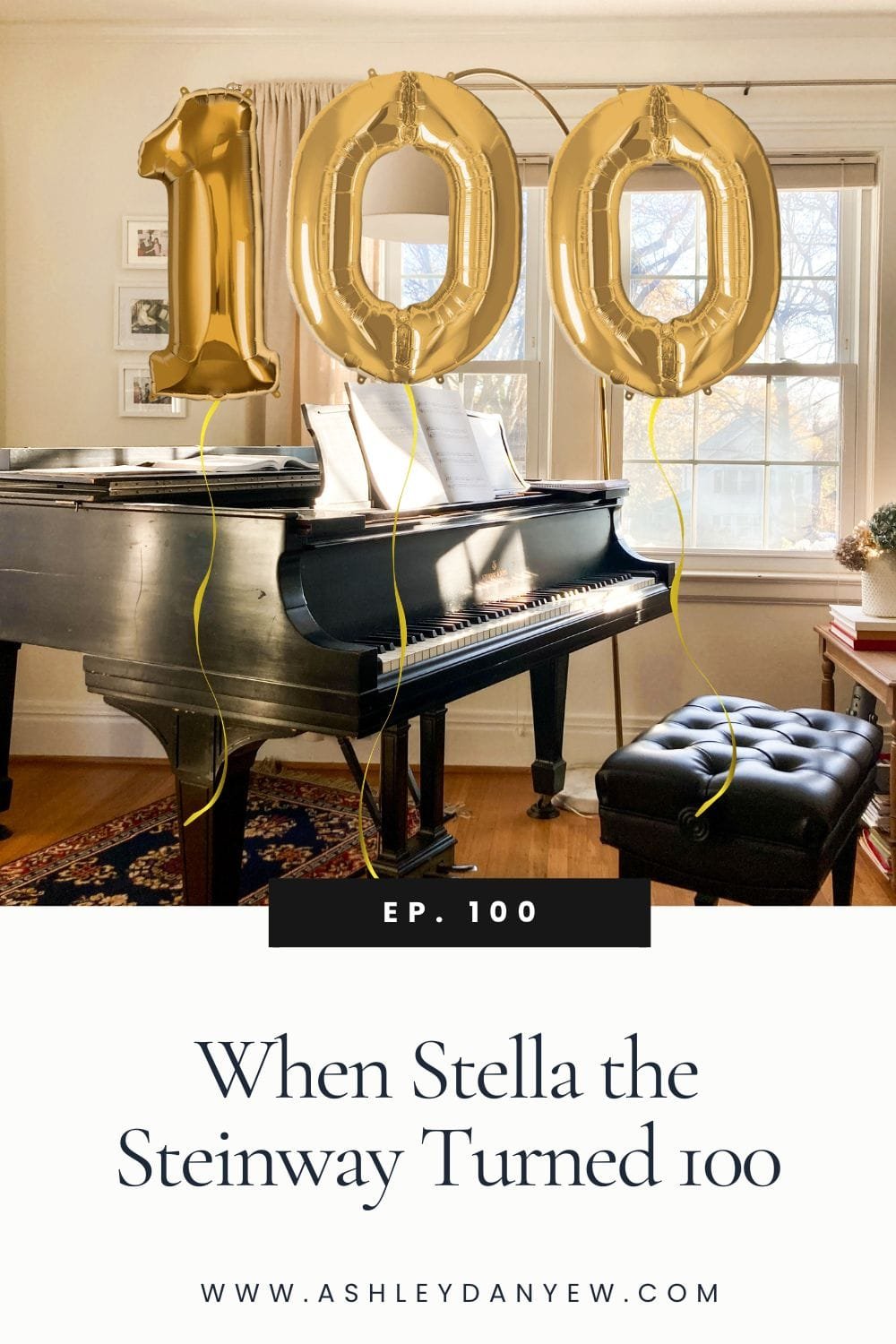
100 - When Stella the Steinway Turned 100
I named my piano Stella the Steinway. The name came to me one summer night during the pandemic, in a Zoom lesson with Annabelle, a curious, imaginative 8-year-old.
I have owned Stella, a 1922 Model O Steinway, for 11 years. In 2022, I thought of a unique way to celebrate the piano’s 100th birthday: A program of piano music written or published in 1922, the year the piano was built.
In this, my 100th podcast episode, I’m revisiting the project and sharing the recordings I made in honor of Stella’s 100th birthday.
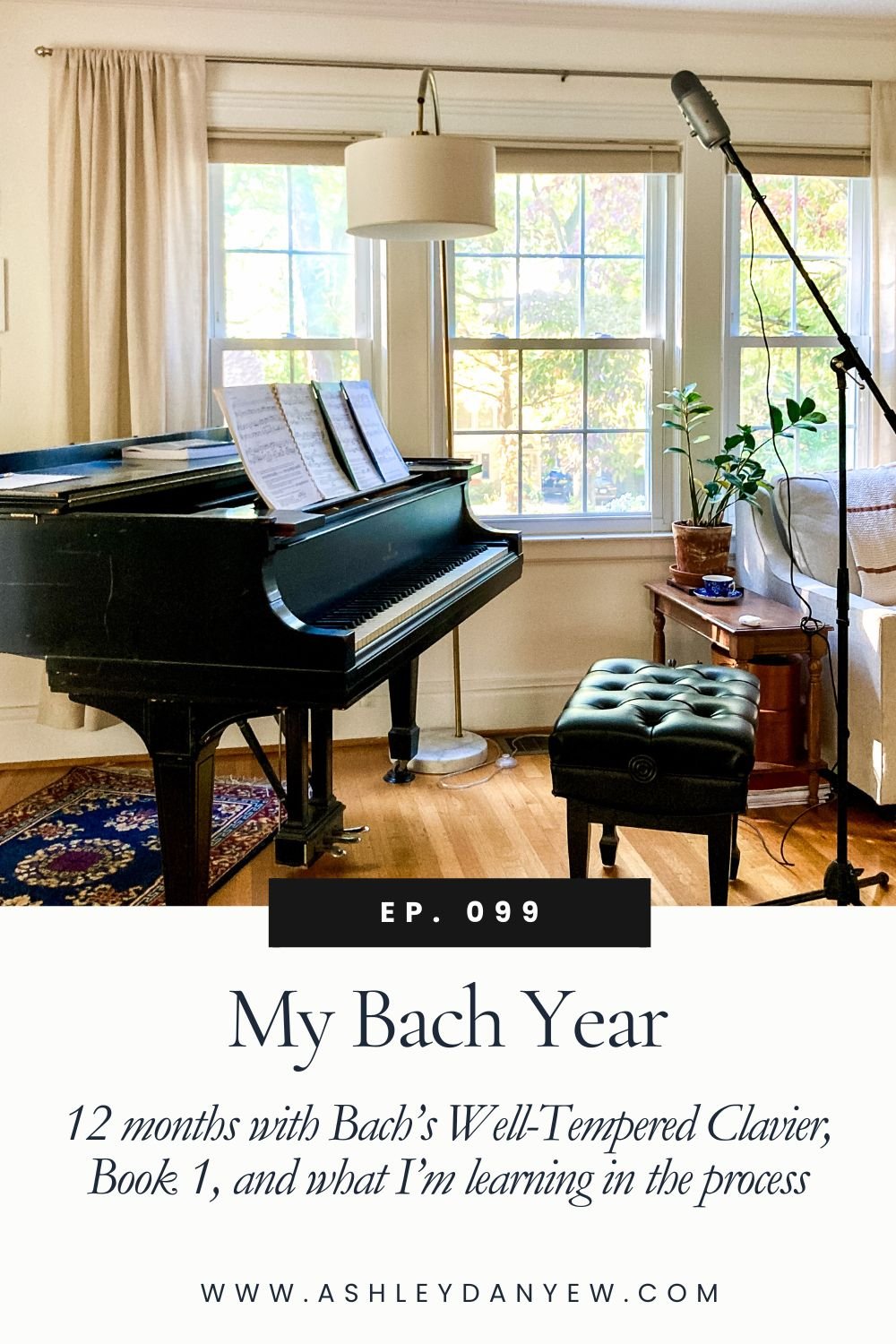
099 - My Bach Year
It started with an aspiration: “I want to get back into regular practicing,” I said to Steve one day. “But without a performance commitment, it’s hard to justify the time. What’s the point?” “There doesn’t need to be a point,” he said simply. “Do it for you. I think you’d enjoy it.”
In that moment, I gave myself permission to start: A recommitment, a new routine, an artistic practice.

098 - Five Ways I’m Applying Slow Productivity to My Studio
Earlier this year, I reread Cal Newport's Slow Productivity: The Lost Art of Accomplishment Without Burnout.
One of the things I really enjoy about Cal’s books is how well-researched they are. The three principles he outlines in this book are informed and enriched by writings, studies, and historical insights.
Cal addresses two main questions in this book: 1) How do we accomplish meaningful work without burnout? and 2) Can we take a slow approach to productivity?
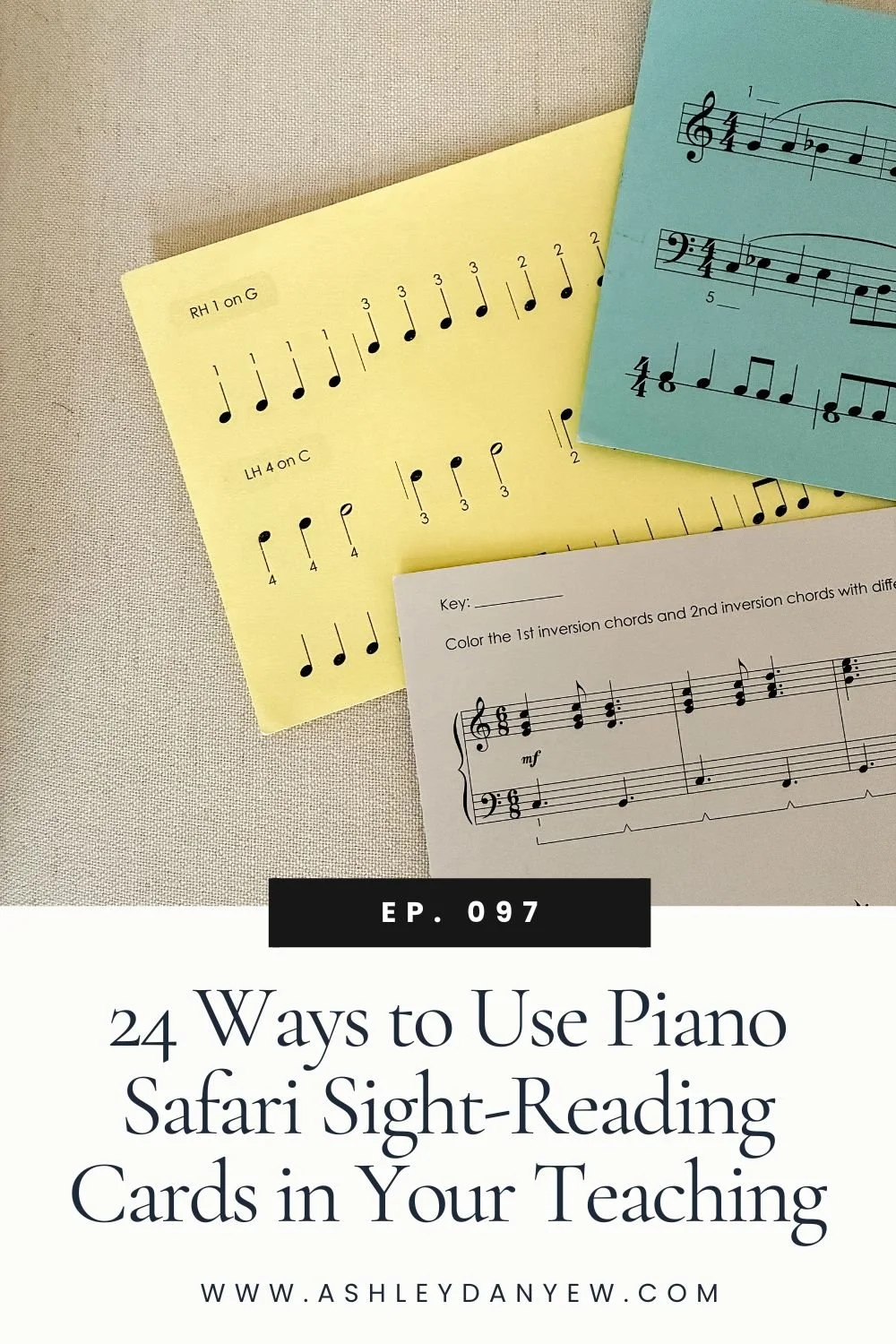
097 - 24 Ways to Use Piano Safari Sight-Reading Cards in Your Teaching
I started using Piano Safari in my studio five years ago. There are a lot of things I like about the curriculum and pedagogical approach—the emphasis on rote teaching and pattern-based learning, creative exploration and improvisation, an intervallic approach to reading, and repertoire that is expressive and captivating for young learners—but one of my favorite resources is their correlated sight-reading cards.
In this episode, I’ll share my 7-step teaching process for using these cards in lessons with elementary and early-intermediate students, and 24 creative ways to incorporate them into your teaching.
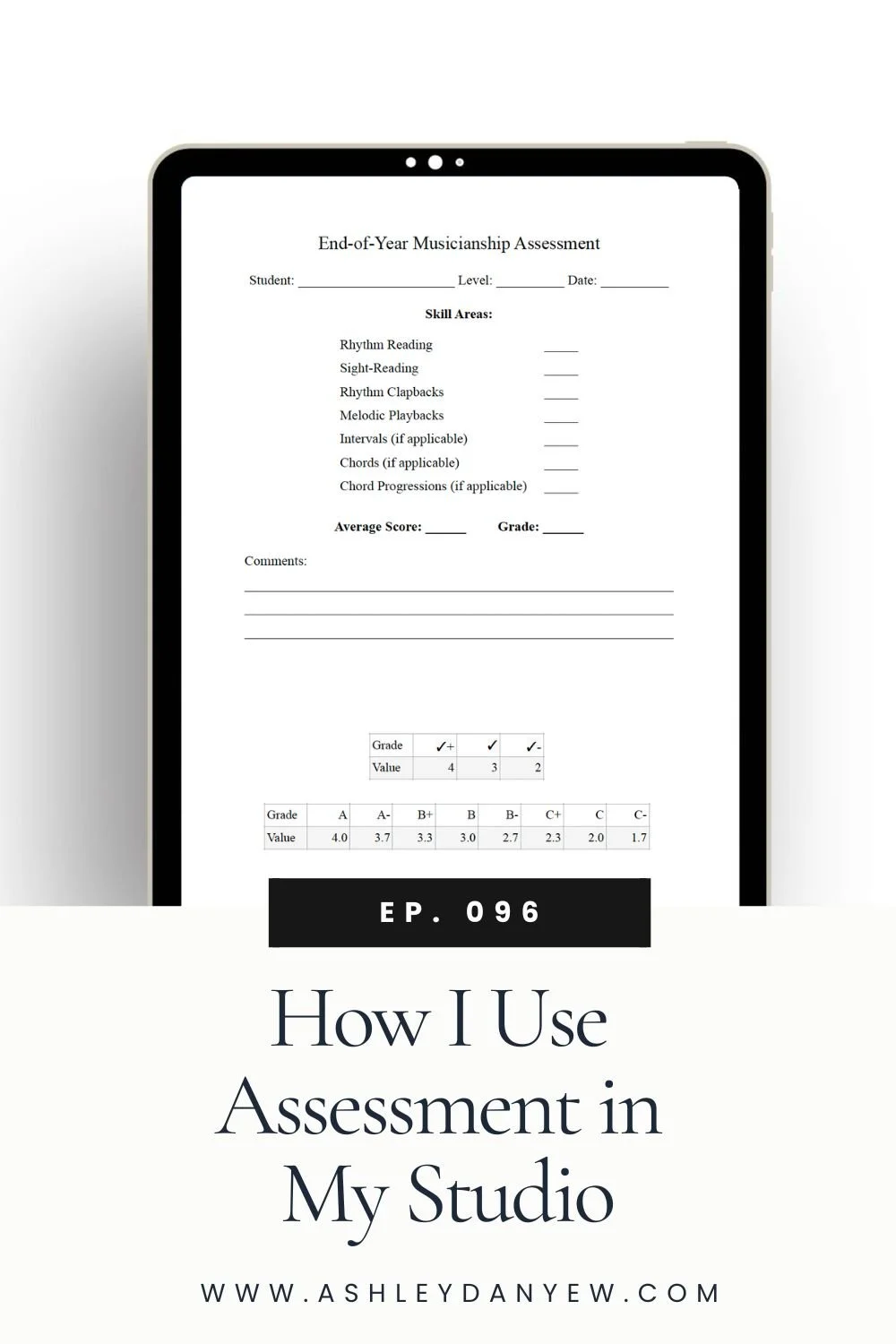
096 - How I Use Assessment in My Studio
Assessment is a process of measuring, evaluating, and documenting learning.
This informs our teaching, curriculum planning, and repertoire choices. In turn, it also helps students develop a diverse set of musicianship skills, including technique, performance, aural skills, sight-reading, and musical creativity.
In this episode, we’ll talk about how to plan an assessment for your studio, including defining assessment criteria and choosing measurement tools, and how to use this data to motivate your students and inform your teaching.
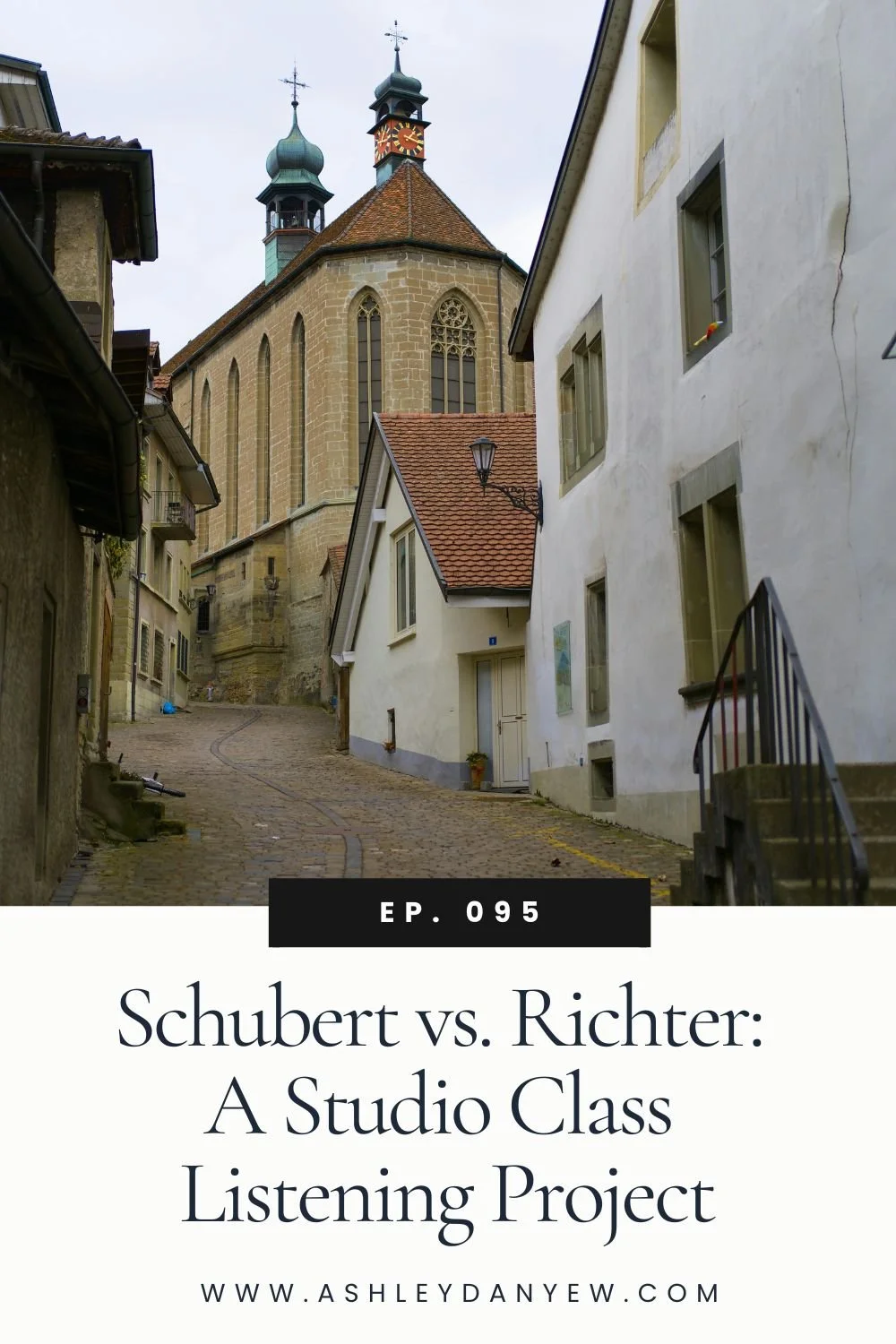
095 - Schubert vs. Richter: A Studio Class Listening Project
I love doing listening projects in my studio classes. These leveled, small-group, hour-long classes are offered 5-6 times per year, with 3-5 students per group. I always include a performance element and plan several themed activities spanning technique, sight-reading, rhythm, improvisation and composition, and listening.
In a recent class with three intermediate students (8th-11th grade), we compared the music of Franz Schubert and Max Richter.
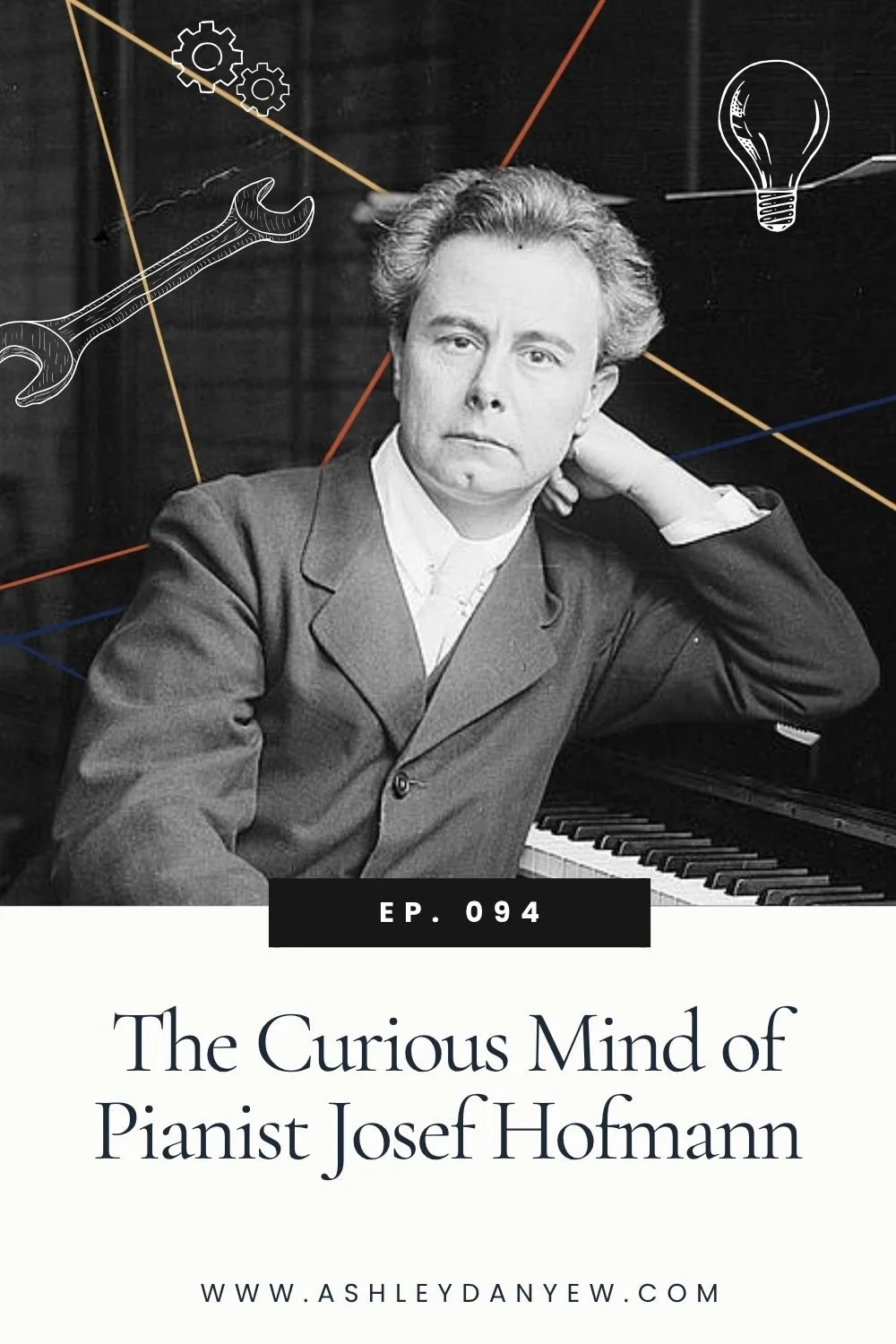
094 - The Curious Mind of Pianist Josef Hofmann
What does it look like to be a musician who is also an inventor—someone whose curiosity about how things work shapes the way he approaches his instrument? Pianist Josef Hofmann spent his entire career exploring that, and his story is worth knowing.
This year marks the 150th anniversary of Hofmann's birth. He was a Polish-American pianist, born in 1876, and considered by many—including Sergei Rachmaninoff—to be the greatest pianist of the 20th century. And yet, despite his many musical achievements, including a fifty-year performing career, 100 compositions, commercial recordings, a signature tone, and enviable technical precision, he doesn't have the same name recognition as his contemporaries.
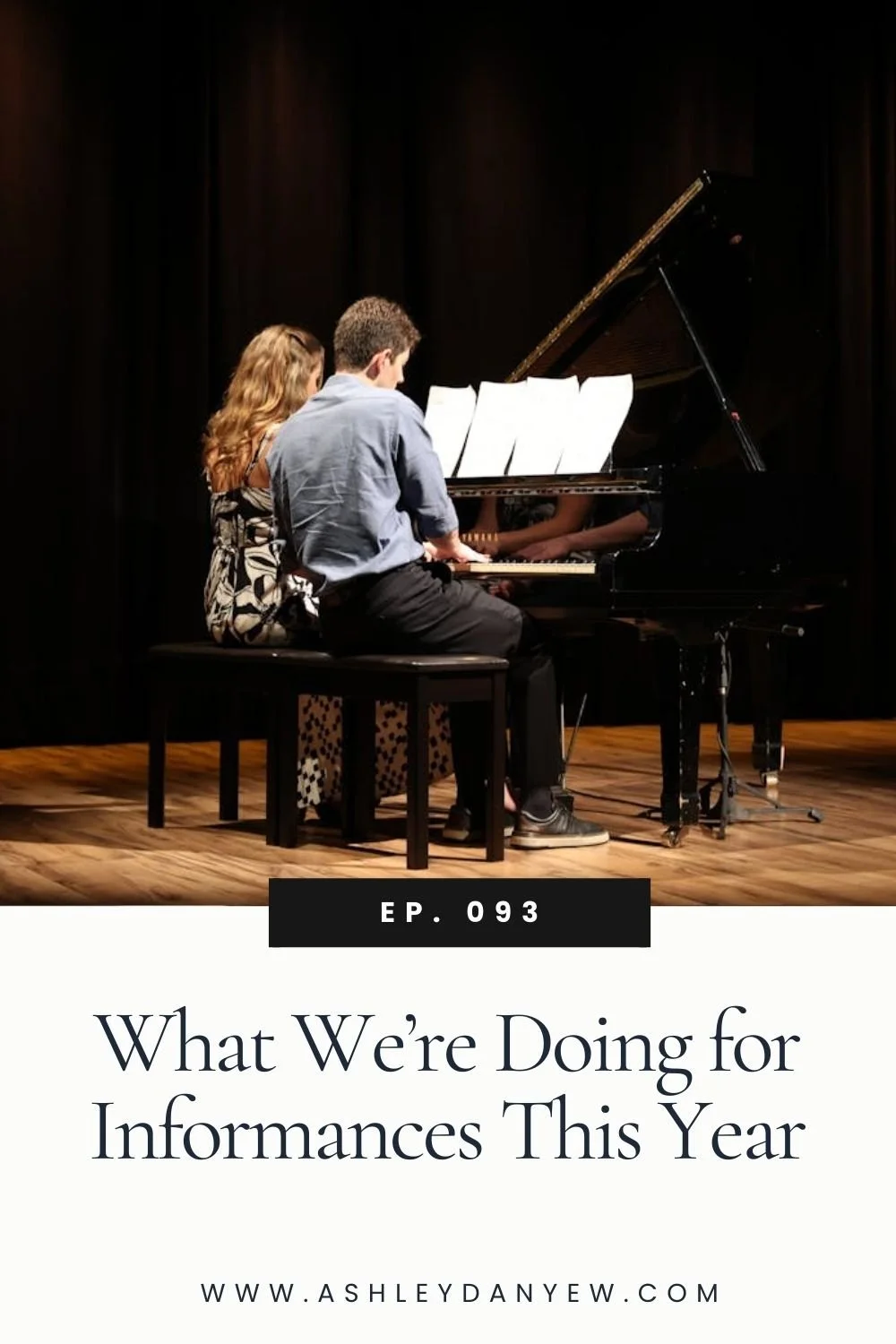
093 - What We're Doing for Informances This Year
March in my studio means one thing: informance season. We spend 10 to 12 weeks getting ready—learning and analyzing music, practicing demonstrations, preparing to talk to the audience. And this year, I knew from the start that the theme was going to require a little more planning than usual.
If you’re new around here, I define a musical informance as an informal, informational performance that integrates education and experience. It’s an opportunity for students to share what and how they’re learning and invite parents and audience members into the music-making process.
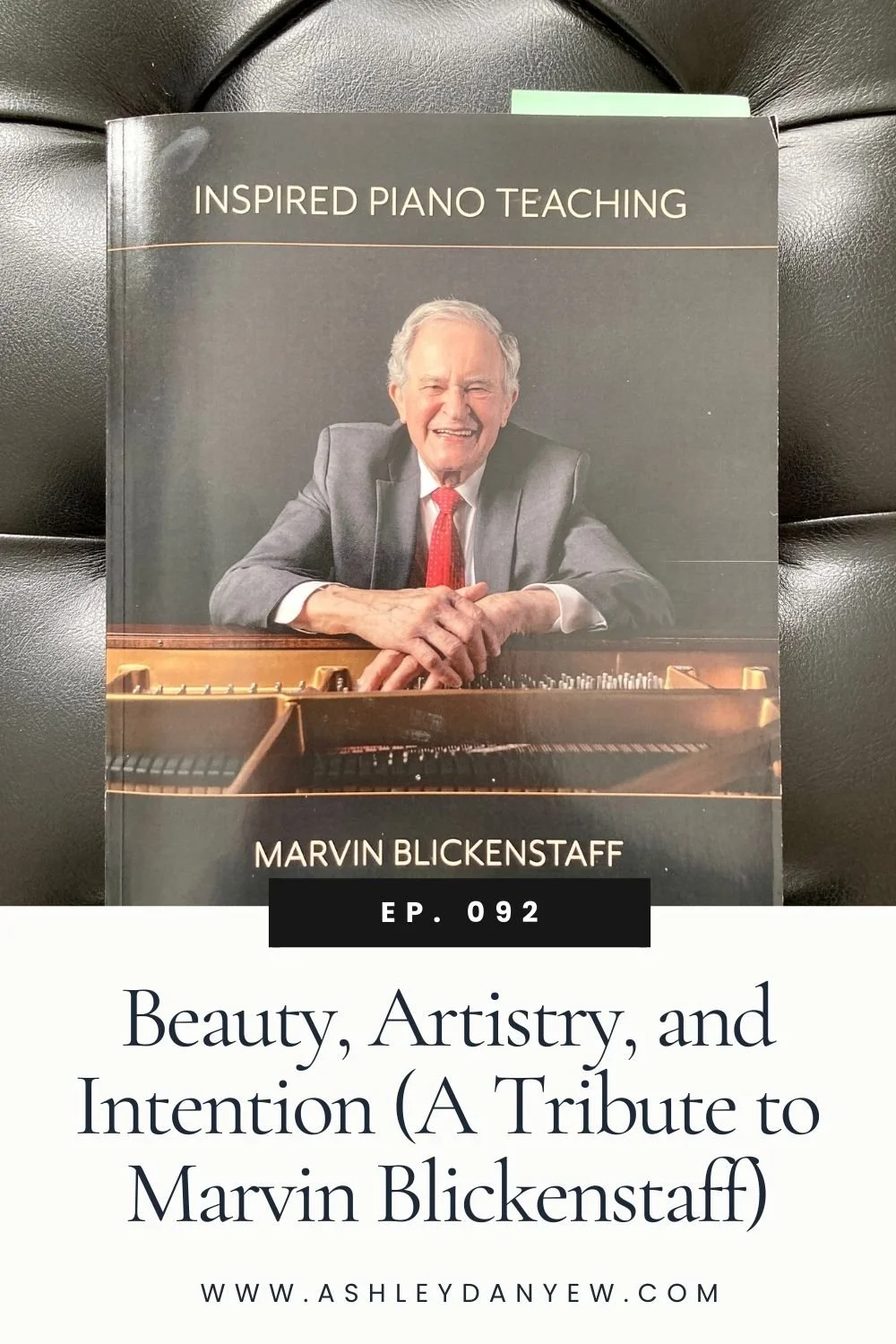
092 - Beauty, Artistry, and Intention (A Tribute to Marvin Blickenstaff)
At the end of January, we lost a wonderful musician, teacher, and pedagogue, Marvin Blickenstaff. You’ve probably heard me talk about Marvin on the podcast before—he had a profound impact on my teaching through the years.
With a career spanning over six decades, Marvin dedicated himself to serving piano students and teachers worldwide. He valued deep emotional expression at the keyboard and a human connection through the music. He once said, “The only reason that music exists is to express who we are and how we feel.”
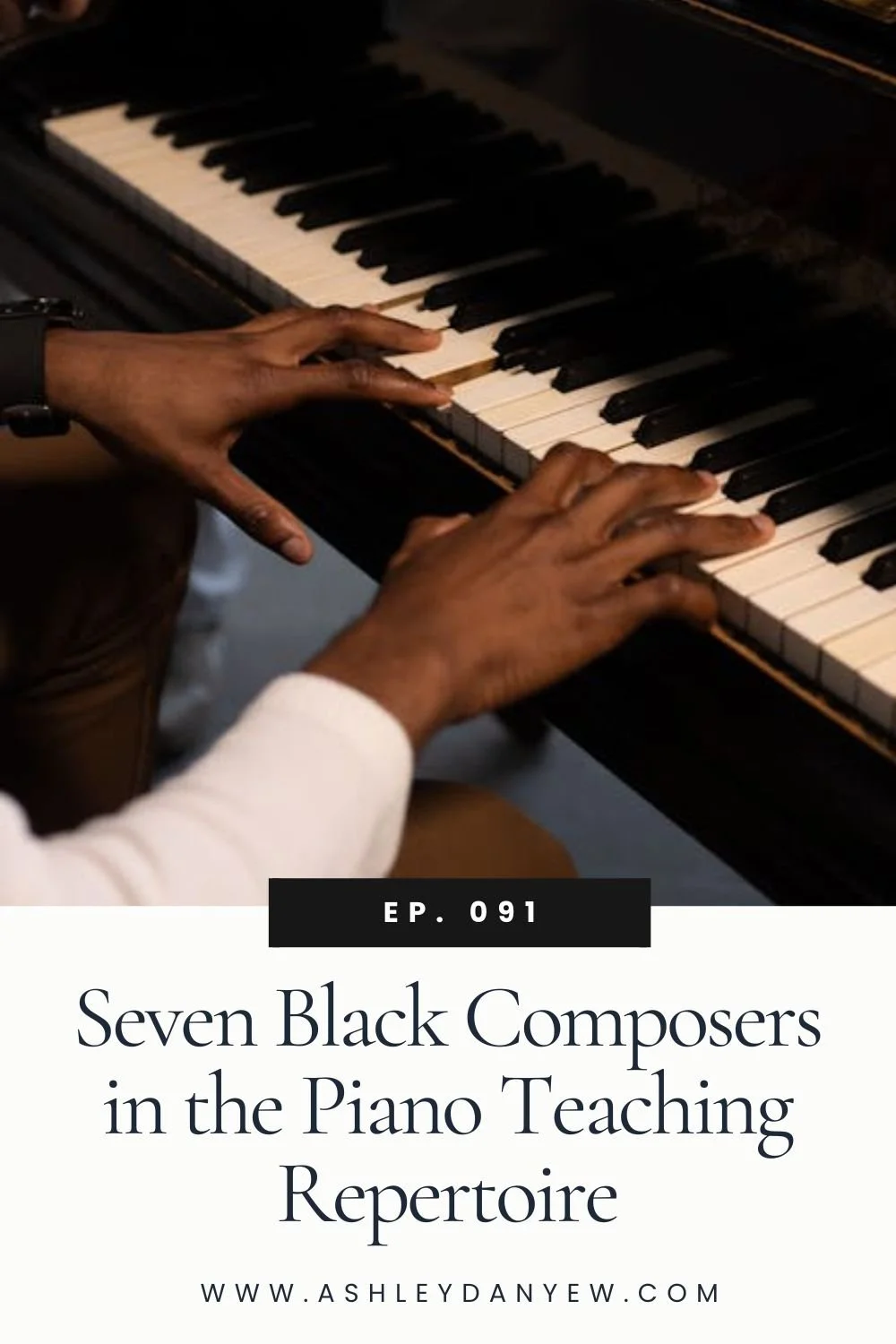
091 - Seven Black Composers in the Piano Teaching Repertoire
February is Black History Month—a time to honor and celebrate the contributions of African Americans. As a music teacher, this prompts me to pause and evaluate what I’m teaching, but also why. I ask questions like:
How much diversity is present in my students’ method books and repertoire?
Which pieces should we skip due to their complicated history?
How can I make more thoughtful, informed choices about the music I put in front of my students—choices that are pedagogically sound and historically responsible?

Hi, I’m Ashley—
A musician, educator, writer, and entrepreneur dedicated to helping you lead and teach with creativity and confidence. Here, I share creative teaching ideas and practical resources to help you build a successful career as a musician and teacher.
Looking for a specific topic? Start here:
ONLINE COURSESDive into step-by-step, on-demand courses and develop the skills and strategies you need to lead, teach, perform, and manage your music career with confidence. Learn more >>


Get monthly updatesGet my free, 7-min. monthly newsletter—loved by 24,100+ musicians & educators. Subscribe >>

Read the BlogPedagogical, practical ideas, helpful tools and resources, and creative strategies to help you lead and teach with confidence. Read now >>