
095 - Schubert vs. Richter: A Studio Class Listening Project

Resources Mentioned
*Disclosure: Some of the links in this episode are affiliate links, which means if you decide to purchase through any of them, I will earn a small commission. This helps support the podcast and allows me to continue creating free content. Thank you for your support!
Ep. 083 - Bernstein & Bill Evans: Inside My Recent Intermediate Studio Class
Schubert Piano Sonata No. 20 in A Major, D. 959: II. Andantino (Mitsuko Uchida)
Richter “Andante” from In a Landscape (Max Richter)
Schubert Impromptu No. 3 and Richter Infra 3 (Coversart)
Songs Without Words (Felix Mendelssohn)
Schubert Moments Musicaux No. 6 in A-flat Major (Alfred Brendel)
Vladimir’s Blues (Max Richter)
Max Richter Piano Works (Max Richter)
I love doing listening projects in my studio classes. These leveled, small-group, hour-long classes are offered 5-6 times per year, with 3-5 students per group. I always include a performance element and plan several themed activities spanning technique, sight-reading, rhythm, improvisation and composition, and listening.
In Episode 083, I shared about a project I did with intermediate students comparing Leonard Bernstein’s “Some Other Time” and Bill Evans’ “Peace Piece.” We listened to the two pieces and analyzed them—tonality, meter, style, interesting features, tempo, form, and melody. Then, students learned the basic chord progression and improvised their own piece.
We’ve played a game I created called “Musical Memory,” which I talk about in Episode 077, and analyzed the music of Bach vs. Beethoven and Mozart vs. Schubert. This has given us a chance to talk about composers that otherwise may not come up in elementary lessons (especially Schubert), explore genres and stylistic differences, and listen to a variety of classical recordings.
In a recent class with three intermediate students (8th-11th grade), we compared the music of Franz Schubert and Max Richter. Schubert was a prolific Austrian composer, writing at the end of the Classical period and the beginning of the Romantic period. During his brief life, he wrote over 1,500 works, including 600 songs (called Lieder), seven symphonies and one unfinished one, 14 piano sonatas, plus impromptus and other miscellaneous works, and chamber music.
He was known for his storytelling abilities: long, singing lines, dramatic mood swings, an improvisatory style that seems to wander at times, and emotional intensity.
Max Richter is a contemporary German-born pianist and composer known for blending classical techniques with electronic, ambient, and minimalist styles. He names J.S. Bach as a key influence, and famously reimagined Vivaldi's The Four Seasons in his album Recomposed. He has championed the works of minimalists such as Arvo Pärt and John Cage, and drew inspiration from Schubert’s Winterreise when creating his 2010 album Infra.
In this episode, I’m taking you behind the scenes of this studio class, sharing the repertoire I introduced to my students, the discussion questions that guided our conversation, and a composition activity that students didn’t want to end.
Three Comparisons of Pieces by Franz Schubert and Max Richter
Schubert’s Andantino vs. Richter’s Andante
I started with a recording of Schubert’s Piano Sonata No. 20 in A Major, D. 959, the second movement, Andantino.
In class, we listened to the first several minutes of the Mitsuko Uchida recording. I love her left-hand articulation. The students immediately picked up on the “walking” character, but also identified unsettledness—something foreboding.
“It sounds like a funeral,” one student said. It brought new meaning to the piece when I shared that Schubert finished this sonata just a few months before he died at the early age of 31. “So it was about a funeral!” the same student said.
Next, we listened to Max Richter’s “Andante” from his solo piano album In a Landscape. The tempo is a bit faster, and the chords are a bit more lush, but the parallels between the two pieces were at once apparent. The same key, the same lumbering left hand, the same repetition, but written two hundred years apart.
Schubert’s Impromptu No. 3 vs. Richter’s Infra 3
Next, I played Schubert’s Impromptu No. 3, written in 1827, and Richter’s “Infra 3,” written in 2008.
This is classic Schubert, featuring a singing melody floating over an unbroken, harp-like accompaniment—a precursor to the lyricism of Mendelssohn’s Songs Without Words. It’s deeply introspective and serene.
As we listened to Richter’s Infra 3, students were immediately struck by the similar texture: a singing melody floating above a rippling accompaniment. However, the accompaniment has a bit more energy and restlessness—almost like a machine whirring in the background. It’s less introspective and a little more melancholic, set in the key of F-sharp minor instead of Schubert’s G-flat major. And the minimalist influence shows in the repeated patterns vs. Schubert’s narrative arc and use of complex harmonies to create different moods.
Schubert’s Moments Musicaux No. 6 vs. Richter’s Vladimir’s Blues
Since April is National Poetry Month, we talked about how these two composers create music that follows poetic structure.
Schubert’s Moments Musicaux are short pieces that center on a single emotion or idea, similar to the brevity of a haiku. As we listened to Alfred Brendel play No. 6 in A-flat Major, I asked the students, “If this were a poem, what would the punctuation look like?” You can hear the breaths at the ends of phrases—lots of cadence points functioning as punctuation, in a sense.
To compare, we listened to Richter’s “Vladimir’s Blues.” His use of space in the left-hand melody and stretch in the minimalist right-hand pattern creates breath—commas and periods.
Editor’s Note:
“Infra 3” and “Vladimir’s Blues” are both included in this
solo piano collection, Max Richter Piano Works.
A Composition Prompt
For the last 20 minutes of class, I gave the students a composition project. I gave them a sheet of blank paper and the text of five haikus in the public domain. I asked them to write a melody based on a poem of their choosing.
Here’s an example of one:
“In the Moonlight” by Yosa Buson, 18th c.
“In pale moonlight
the wisteria’s scent
comes from far away.”
I encouraged them to choose a key and tonality that reflected the text. They started by figuring out the natural rhythm of the text and identifying which words they wanted to emphasize. For instance, “COMES from FAR a-WAY” has an underlying triple feel. Then, they took turns at two pianos (in adjoining classrooms), exploring keys and developing melodies.
We talked about text painting and intervals and how they could continue to develop this composition on their own. They didn’t want the class to end! I was sorry we didn’t have a few more minutes to spend on this, but I was glad to see them so engaged in the project and walking out the door buzzing with inspiration and creative ideas.
This is one of the reasons I love doing projects like this in studio class: It gives us time to really go deep and explore these topics from multiple perspectives—more than we can do in a weekly private lesson. And students can learn from each other—there’s more discussion and moments of collaboration. There’s so much more than listening, too. There’s music history and harmonic analysis, musical interpretation and expression. I love the chance to explore these topics with my students.
Conclusion
I hope you enjoyed this glimpse into our recent studio class and that it inspires you to incorporate music listening into your teaching on a more regular basis. Think about creative ways to introduce it, projects you can put together, discussion questions to get your students thinking and reflecting, and creative prompts to help them apply what they’re learning.
Let me know if you decide to try a project like this with your students—I’d love to hear how it goes!


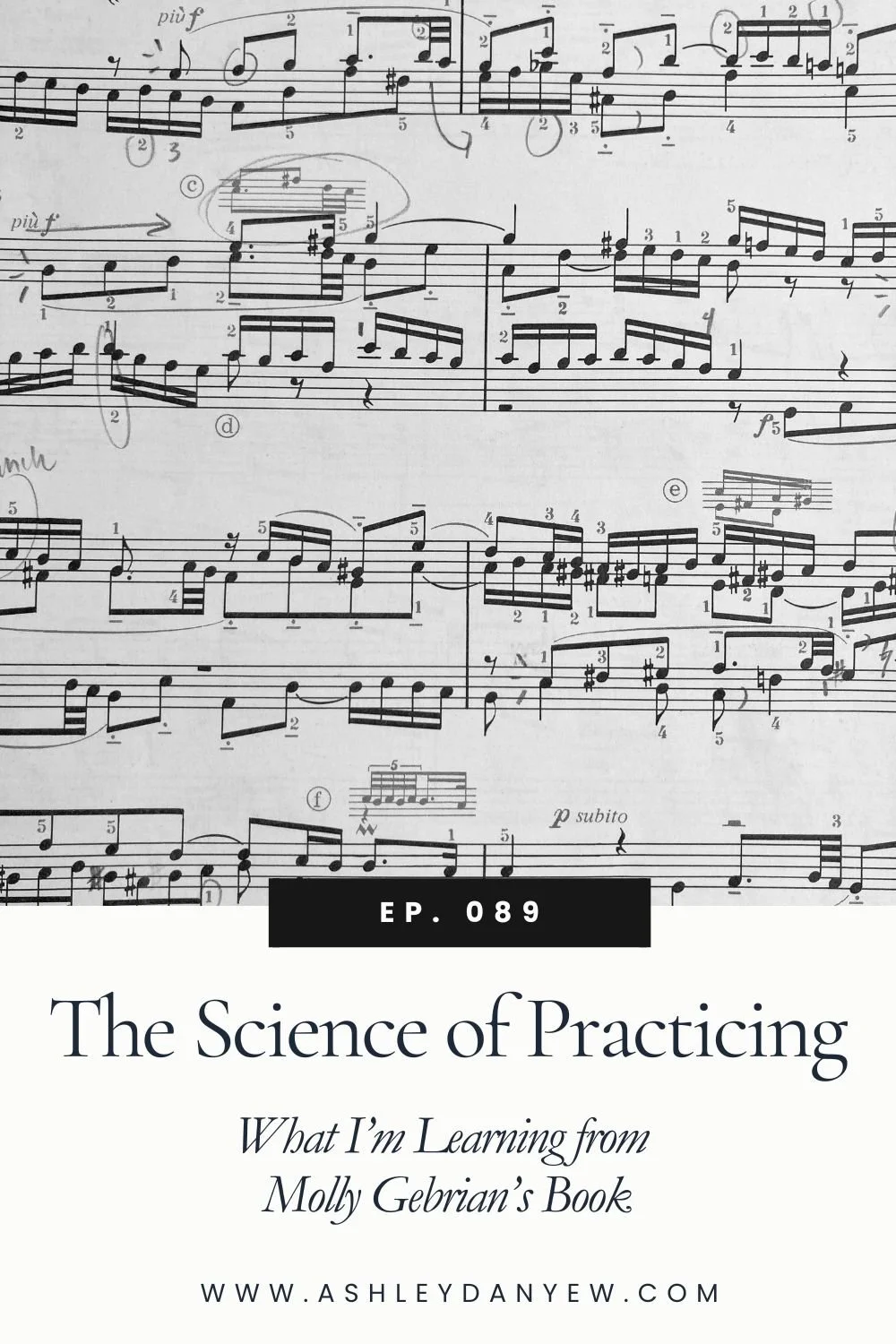
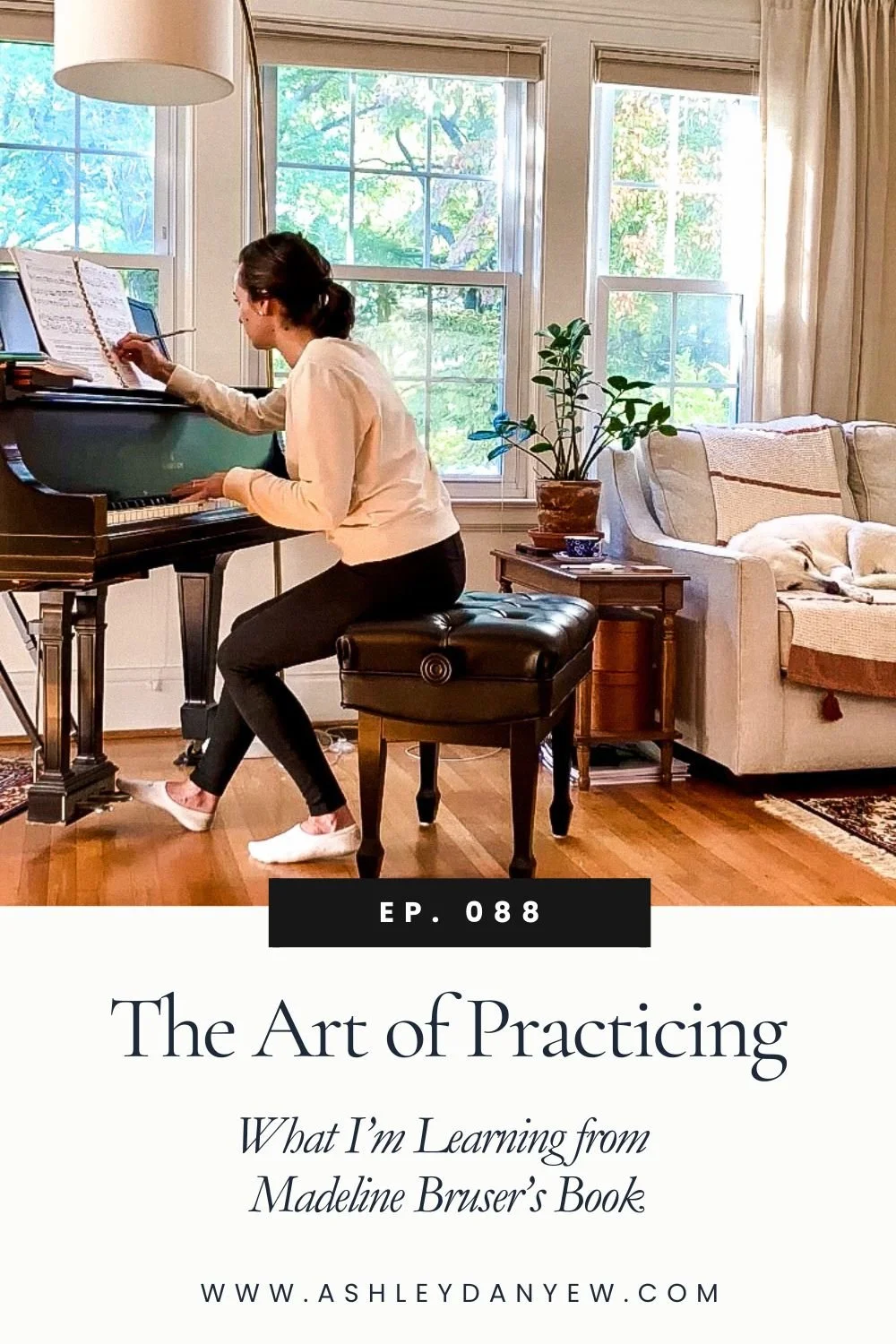







It started with an aspiration: “I want to get back into regular practicing,” I said to Steve one day. “But without a performance commitment, it’s hard to justify the time. What’s the point?” “There doesn’t need to be a point,” he said simply. “Do it for you. I think you’d enjoy it.”
In that moment, I gave myself permission to start: A recommitment, a new routine, an artistic practice.