
5 Ways to Develop Creative Musicianship (Music Education Basics)

Music Education Basics is a free online workshop for music educators in all types of settings.
This is Day 5 of our 5-day video and audio series.
We've covered a lot of ground in a few short days and I hope you're feeling good about all the topics we've reviewed and what you've accomplished on your own in between our lessons this week.
Let’s take a minute to recap what we’ve covered this week:
On Day 1, we talked about the fundamental first step to music-learning that’s often overlooked: listening and responding. Plus, I shared some practical ideas for incorporating this into your teaching at any level.
On Day 2, we talked about what it means to develop language skills in music: namely, the importance of building a solid vocabulary of tonal and rhythm patterns, the building blocks of music.
On Day 3, we made a strong case for musical expression: musical phrasing, dynamics, and movement and why it’s important to incorporate these musical elements into the teaching and learning process from the very beginning.
On Day 4, we talked about readiness for music-reading: music notation, symbols, and intervals and how to introduce these things in an intentional and musical way. Plus, I shared 4 simple steps for helping support the development of reading skills in your students, little by little.

In this episode:
Today, for our final lesson, we’re talking about one of my favorite topics, creative musicianship—what it is and how to teach it, and 5 ways to cultivate creative musicianship in your students.
First, let me explain what I mean by creative musicianship. When I say creative musicianship or musical creativity, I’m talking about improvising or creating music spontaneously and also, the ability to write those ideas down.
Now, if the thought of that makes your palms begin to sweat, I get it! If you had classical music training growing up, you probably didn’t spend much time improvising, composing, or creating your own music. I know that was my experience. Instead, the focus was probably on learning how to read and interpret what was on the page. Can you relate to that?
The ability to read, speak (or create music spontaneously), and write music is an important part of being a musician and developing musicianship skills and we owe it to our students to provide opportunities for them to experience these things and build their confidence.
I'm sharing a few ways you can introduce musical creativity to those you teach in this lesson.
Looking for the workbook? You’ll find it inside the learning platform, ready to download. Sign up for free access >>
If you enjoyed this episode, please take a moment to share it on Instagram!
Looking for more?
If this leaves you curious and ready to dive deeper into the study and practice of music teaching and learning, I’d love to invite you to join me in my signature program, The Art of Music Teaching & Learning.

Created for music educators in all types of settings, this 8-week course is designed to help you think differently about music teaching and learning; to give you the tools, practical applications, advice, knowledge, and confidence to create, design, experiment, and learn.
Inside, you’ll find a creative, practical approach to music teaching and learning, plus plenty of templates, worksheets, and related resources to prepare and equip you for the year ahead. Plus, two live group calls with me to ask questions and get more personalized coaching.
2021 enrollment is open through June 3! I’d love to have the opportunity to work together. Get all the details on the course + enroll >>
I'd love to hear from you.
Leave a comment below and let me know what you enjoyed most about the workshop this week. I’d love to hear from you! 👇

Earlier this year, I reread Cal Newport's Slow Productivity: The Lost Art of Accomplishment Without Burnout.
One of the things I really enjoy about Cal’s books is how well-researched they are. The three principles he outlines in this book are informed and enriched by writings, studies, and historical insights.
Cal addresses two main questions in this book: 1) How do we accomplish meaningful work without burnout? and 2) Can we take a slow approach to productivity?
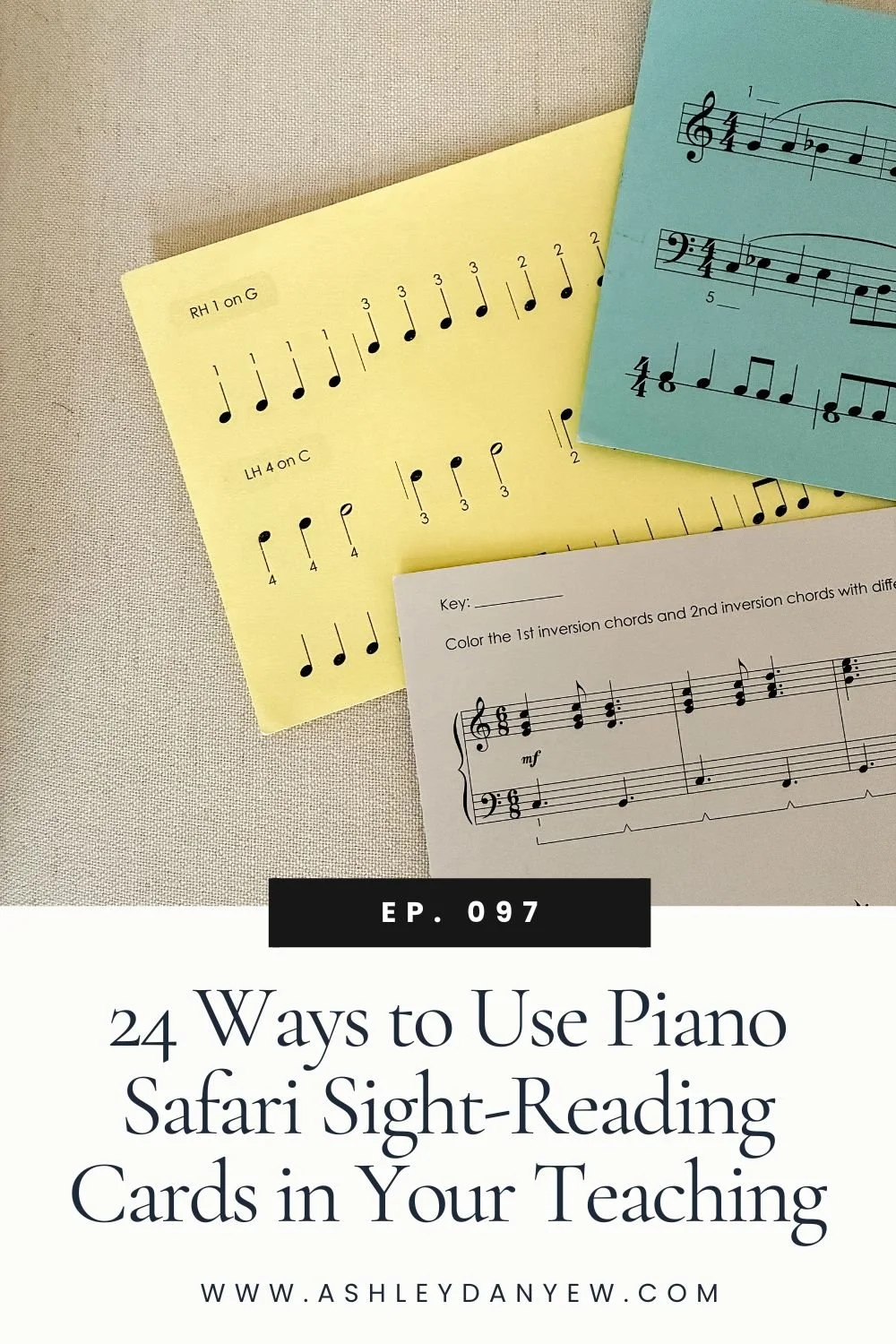
I started using Piano Safari in my studio five years ago. There are a lot of things I like about the curriculum and pedagogical approach—the emphasis on rote teaching and pattern-based learning, creative exploration and improvisation, an intervallic approach to reading, and repertoire that is expressive and captivating for young learners—but one of my favorite resources is their correlated sight-reading cards.
In this episode, I’ll share my 7-step teaching process for using these cards in lessons with elementary and early-intermediate students, and 24 creative ways to incorporate them into your teaching.
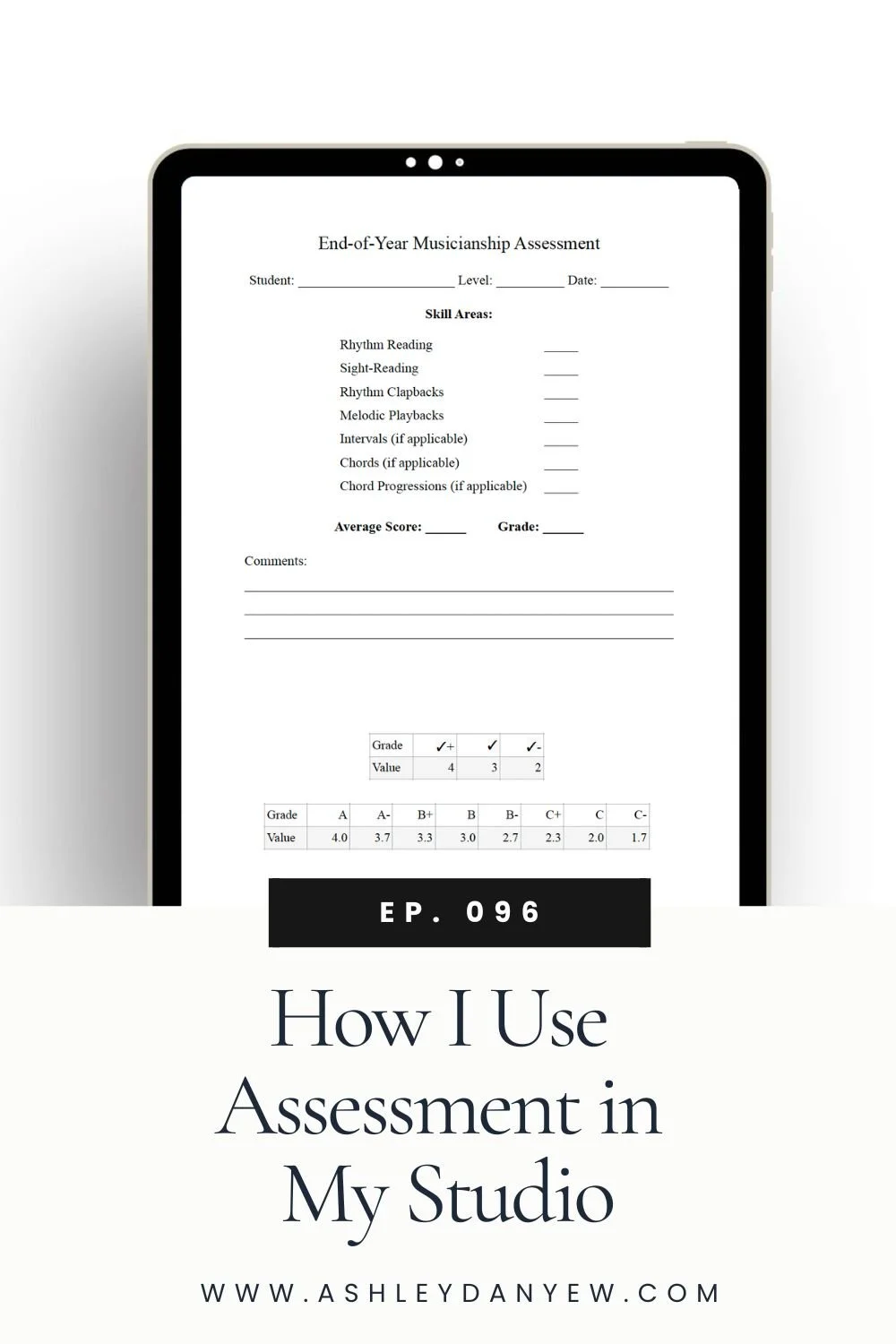
Assessment is a process of measuring, evaluating, and documenting learning.
This informs our teaching, curriculum planning, and repertoire choices. In turn, it also helps students develop a diverse set of musicianship skills, including technique, performance, aural skills, sight-reading, and musical creativity.
In this episode, we’ll talk about how to plan an assessment for your studio, including defining assessment criteria and choosing measurement tools, and how to use this data to motivate your students and inform your teaching.
I love doing listening projects in my studio classes. These leveled, small-group, hour-long classes are offered 5-6 times per year, with 3-5 students per group. I always include a performance element and plan several themed activities spanning technique, sight-reading, rhythm, improvisation and composition, and listening.
In a recent class with three intermediate students (8th-11th grade), we compared the music of Franz Schubert and Max Richter.
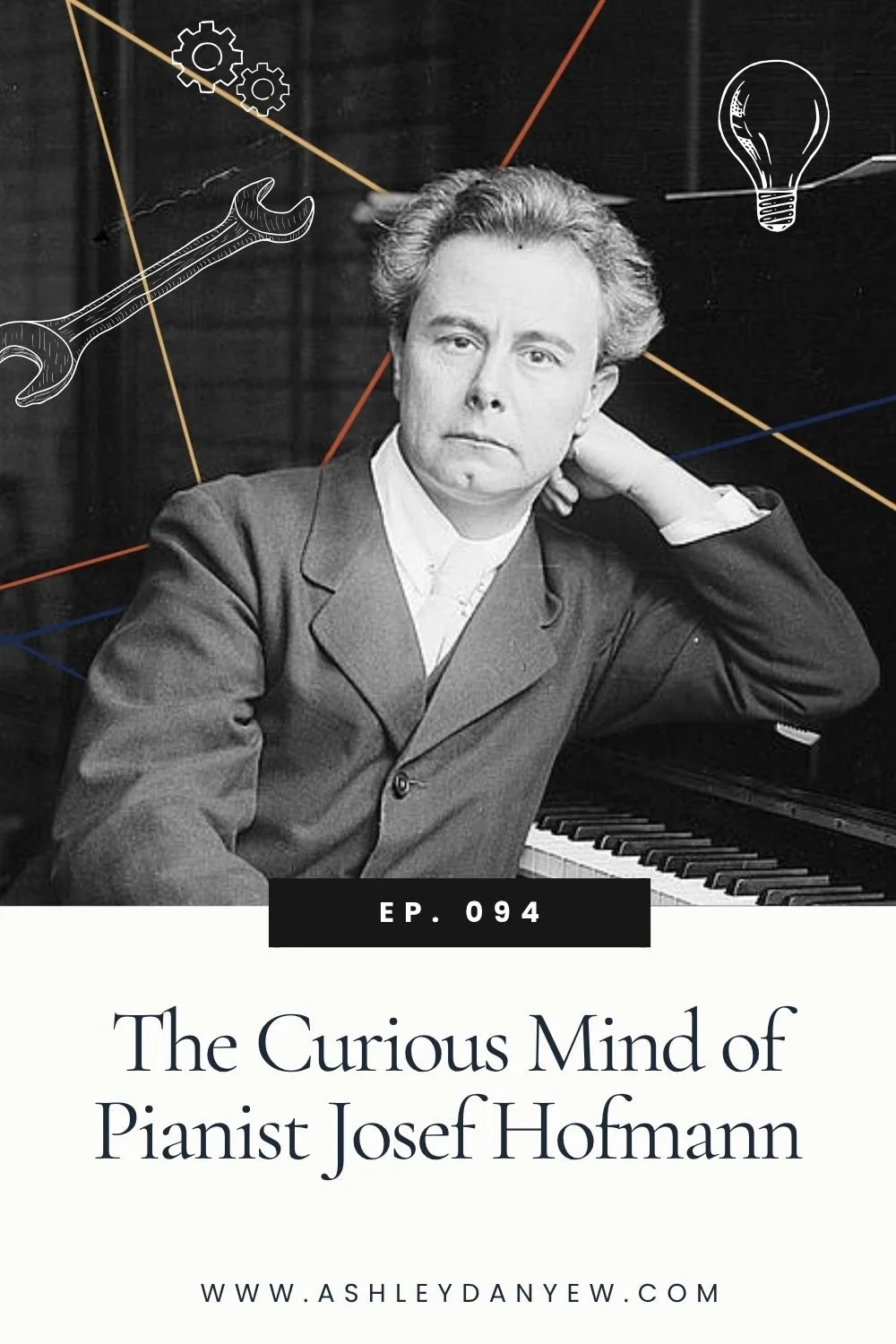
What does it look like to be a musician who is also an inventor—someone whose curiosity about how things work shapes the way he approaches his instrument? Pianist Josef Hofmann spent his entire career exploring that, and his story is worth knowing.
This year marks the 150th anniversary of Hofmann's birth. He was a Polish-American pianist, born in 1876, and considered by many—including Sergei Rachmaninoff—to be the greatest pianist of the 20th century. And yet, despite his many musical achievements, including a fifty-year performing career, 100 compositions, commercial recordings, a signature tone, and enviable technical precision, he doesn't have the same name recognition as his contemporaries.
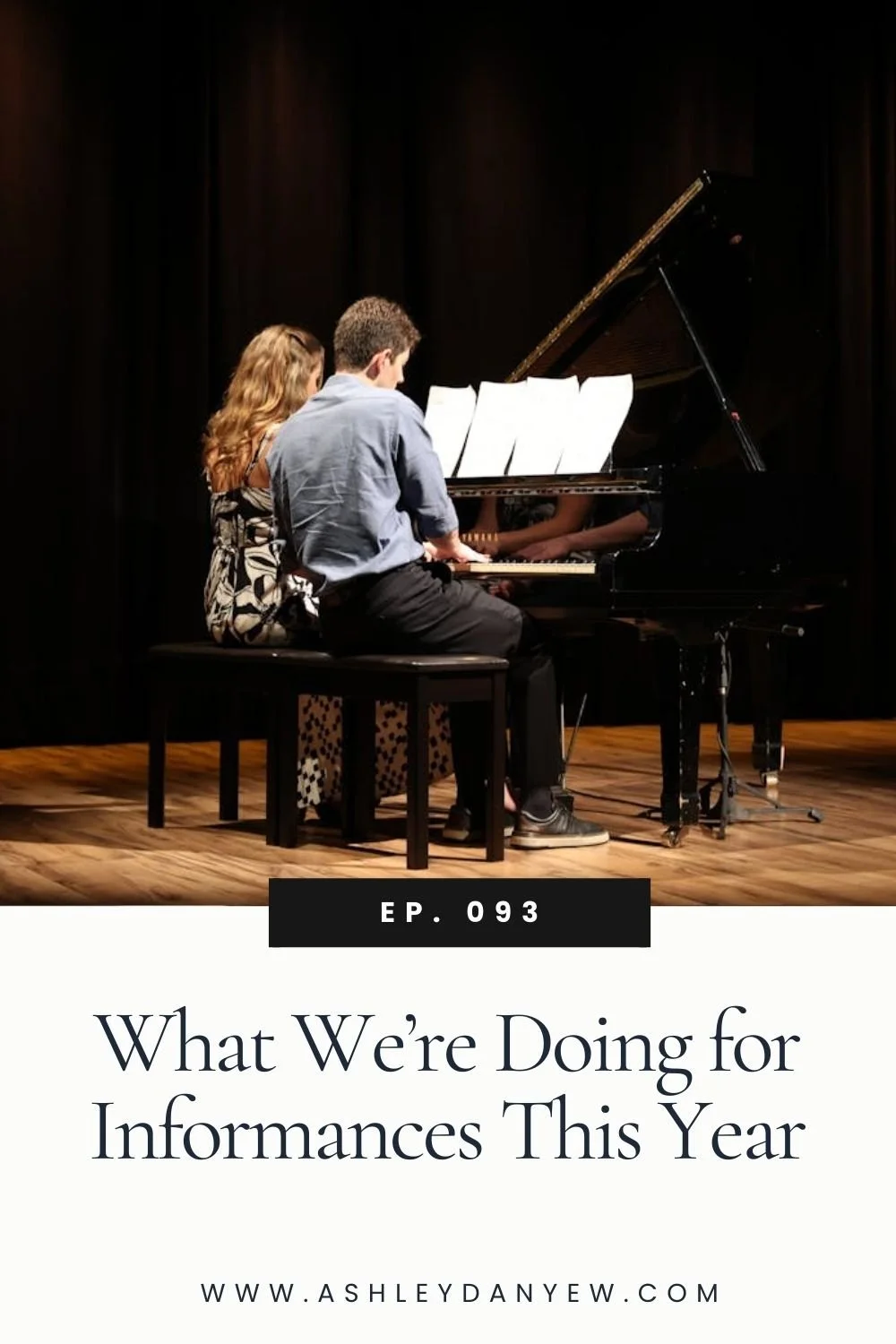
March in my studio means one thing: informance season. We spend 10 to 12 weeks getting ready—learning and analyzing music, practicing demonstrations, preparing to talk to the audience. And this year, I knew from the start that the theme was going to require a little more planning than usual.
If you’re new around here, I define a musical informance as an informal, informational performance that integrates education and experience. It’s an opportunity for students to share what and how they’re learning and invite parents and audience members into the music-making process.
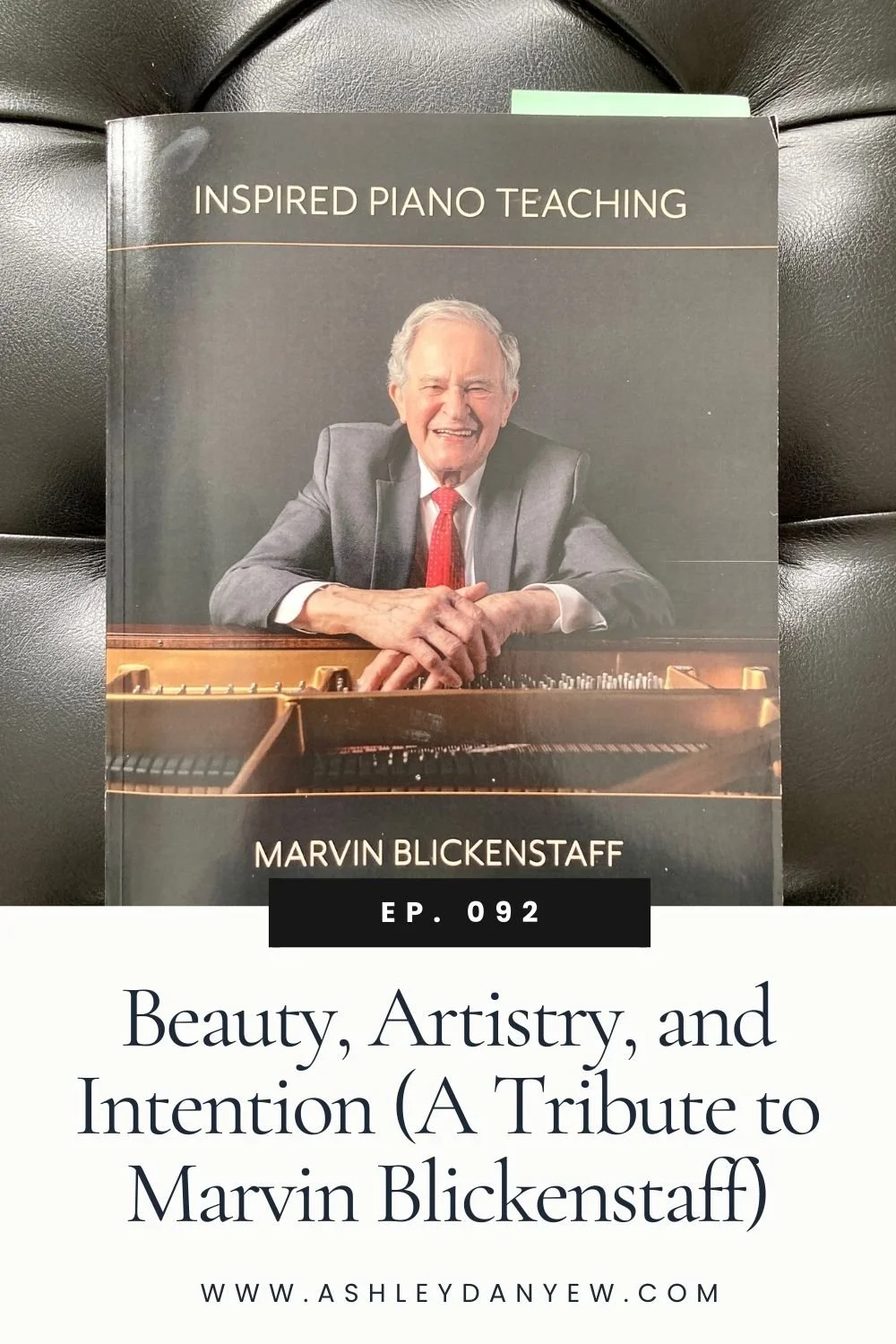
At the end of January, we lost a wonderful musician, teacher, and pedagogue, Marvin Blickenstaff. You’ve probably heard me talk about Marvin on the podcast before—he had a profound impact on my teaching through the years.
With a career spanning over six decades, Marvin dedicated himself to serving piano students and teachers worldwide. He valued deep emotional expression at the keyboard and a human connection through the music. He once said, “The only reason that music exists is to express who we are and how we feel.”
February is Black History Month—a time to honor and celebrate the contributions of African Americans. As a music teacher, this prompts me to pause and evaluate what I’m teaching, but also why. I ask questions like:
How much diversity is present in my students’ method books and repertoire?
Which pieces should we skip due to their complicated history?
How can I make more thoughtful, informed choices about the music I put in front of my students—choices that are pedagogically sound and historically responsible?

As we prepare for the Spring semester and look forward to lessons resuming in January, I want to share nine collections I’ve been using with my students this year. Some are etudes based on specific technical patterns, others are solo repertoire books. Most of these are available through Piano Safari, though they can be used alongside any method book.
For reference, my elementary and early intermediate students are in Piano Safari Levels 1-3 and range from 2nd-7th grade.
If you're looking to refresh your teaching materials for January or add some variety to your studio library, I hope you'll find a few gems here that spark your interest.
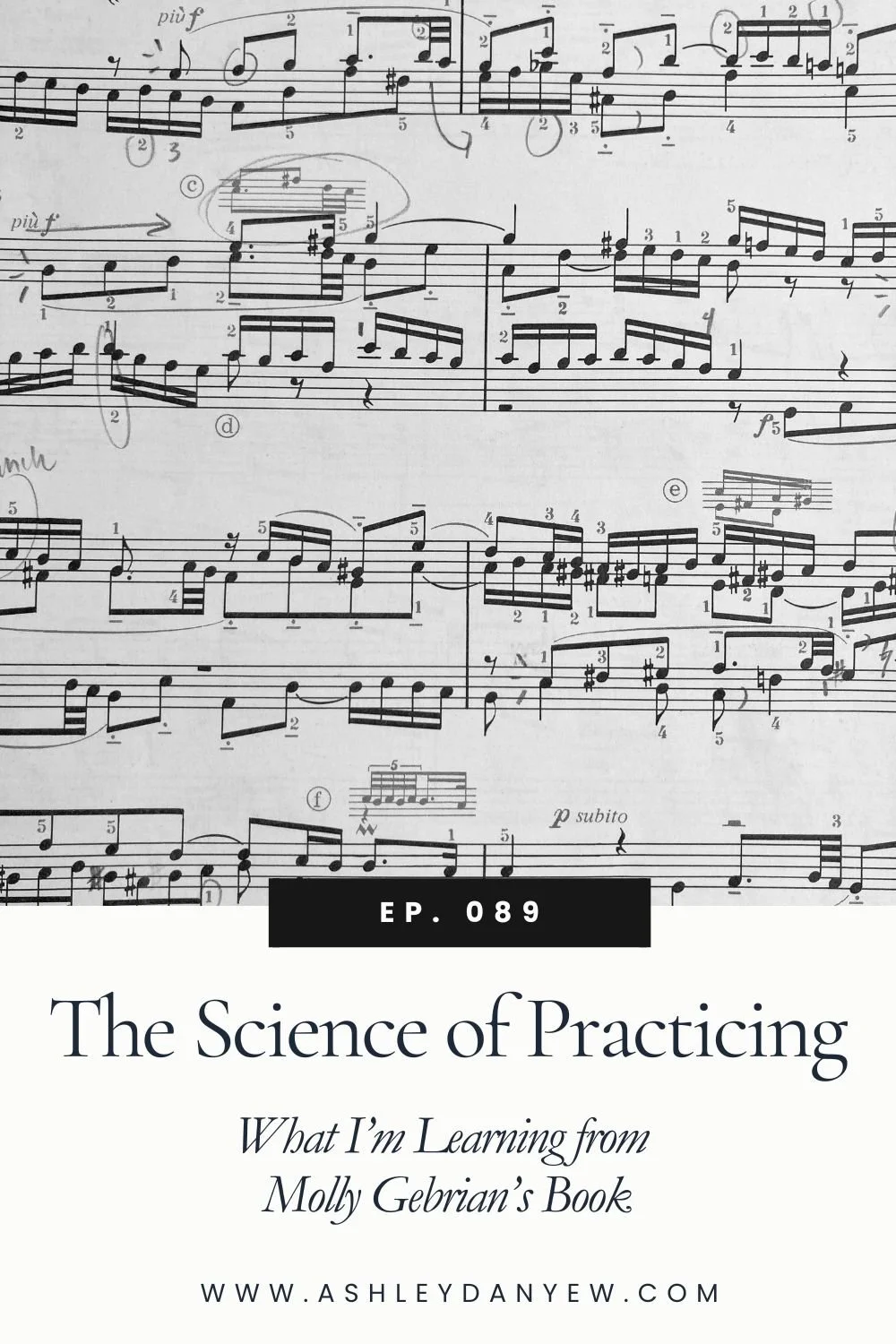
One of the things I love about teaching is that we can draw on many disciplines to make our work better—art, psychology, learning theories, and even neuroscience. Recently, I’ve been reading about what brain research can tell us about practicing and how we learn, and it’s fascinating.
Welcome back to our 2-part series on practicing.
In part 1, we talked about the art of practicing. I shared what I’m learning from Madeline Bruser’s book, The Art of Practicing, and how I’m carrying these concepts and strategies into my practice sessions and studio.
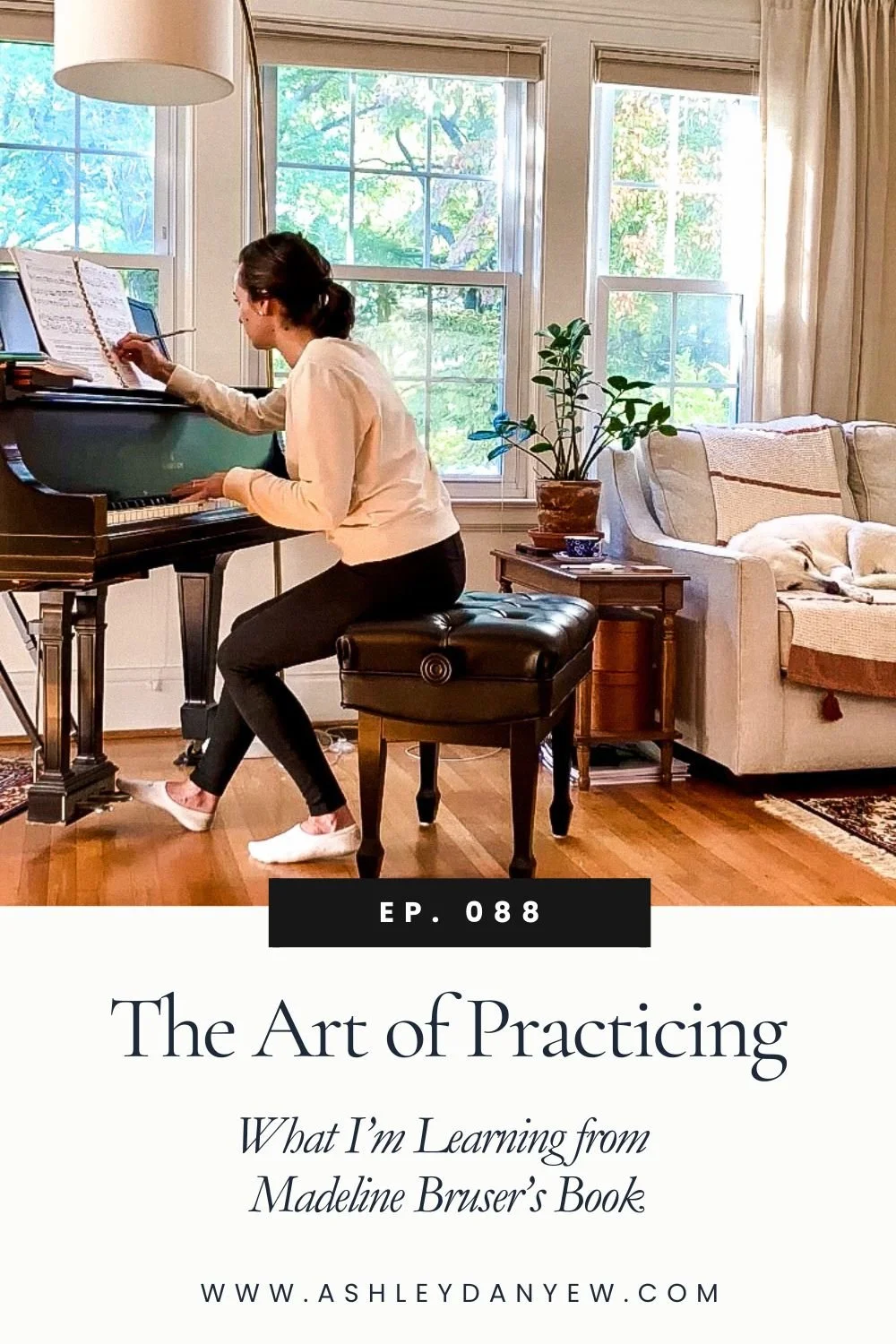
This fall, I read two books about practicing: The first is Madeline Bruser’s, The Art of Practicing: A Guide to Making Music from the Heart. The second is Molly Gebrian’s 2024 release, Learn Faster, Perform Better: A Musician's Guide to the Neuroscience of Practicing.
Art and science. Because practicing requires both.
This is part 1 of a 2-part series about practicing and what I’m learning and applying from both books.
In this episode, part 1, we’ll talk about the art of practicing. I’ll share what I’m learning from Madeline Bruser’s book and how I’m carrying these concepts and strategies into my practice sessions and studio.

It was about this time last year when I got a panicked email from a parent: “Jack broke his left wrist this week. What does this mean for piano? He’s in a cast.”
Has this ever happened to you? Some parents may assume that lessons need to be paused during this time. I mean, they can’t play with only one hand… or can they?
The answer is yes, and there’s more and more one-handed repertoire available. With a broken foot, we can focus on repertoire that doesn’t use the pedal, or they can learn to pedal with their left foot for a few weeks.
But more importantly, what I want to convey to parents (and students) is that playing is only one facet of musicianship. There are so many other things we do in lessons, so many other skills we’re working to develop. It reminds me of something Frances Clark once said, “Teach the student first, the music second, and the piano third.”

Learning to play the piano isn’t just about learning repertoire pieces. It’s about developing a set of keyboard skills that lets you make music anywhere, with anyone, in any style. Technique, performance, and sight-reading are part of it, but so are harmonization, transposition, chord knowledge, and voice-leading. It’s more than the ability to perform what’s on the page; it’s understanding how the music is made.
In this episode, I’ll share why keyboard skills matter for students of all ages and a few strategies I’m using in my studio to build them into lessons from the very first year of study.

When I was in grad school, I took an elective class on Improvisation. I remember shuffling into the 3rd-floor classroom that first day, pulling a blue chair into the semicircle like everyone else, unfolding the desk and preparing to take notes.
“Improvisation is something we can all do,” our professor, Dr. Christopher Azzara began. “We’re born improvisers.” The challenge sometimes is trusting that creative process. Trusting that we have something interesting and musical to say.
Today, I’m sharing a few simple ways to build improvisation into your teaching practice in meaningful ways, even if it’s new to you. You’ll learn what improvisation is and how to get started, how to find inspiration and musical ideas, and activities to do with your students in lessons. I’ll also share a few examples and recordings from my studio recently.

Earlier this month, I hosted my 14th studio piano recital. There’s always so much that goes into planning and preparing for an event like this.
We spend months learning the music and practicing performing. What happens if you play a wrong note or miss a key change? What happens if you forget the repeat or play the first ending twice?
We discuss arm movement and phrase shapes, articulation, and projection, and how it feels and sounds different in the big theater vs. the classroom where we have our lessons. We listen and observe.
Today, I’m sharing my own recap and reflection on this year’s recital—how it went, what I learned, what I observed, and how it’s shaping my teaching practice for the year ahead.

It starts simply. Two blocked jazz chords with I-V in the bass. And then the vocalist comes in:
“Twenty-four hours can go so fast.
You look around, the day has passed…”
This is Leonard Bernstein’s song “Some Other Time” with lyrics by Betty Comden and Adolph Green, written for the 1944 musical, On the Town. It’s about three sailors on 24-hour leave in New York City who meet three women before leaving for war. Four characters perform this song (in the stage version), hoping to catch up some other time, but knowing they may never see each other again.

Some of you may not know this about me, but I’m a musician and an artist.
I always loved art as a kid—from finger painting in my blue smock at my Little Tikes easel to coloring and tracing to the pastel class I took one summer, culminating in our work being displayed in a local bank. For a while, my answer to the question, “What do you want to be when you grow up?” was “An artist or illustrator.”
Music was always there, too—singing and playing the piano, learning letter names as I learned the alphabet, and later, accompanying, teaching, performing, and arranging.
At some point, I set art aside to focus on music.

March is Women’s History Month and by extension, Women in Music Month—an opportunity to acknowledge and celebrate women’s contributions to our field.
When I was a grad student at Eastman, they used to have an annual Women in Music Festival in March. Students and faculty worked together to create a series of programs and lunchtime concerts featuring music (and sometimes lyrics) by women. I had the opportunity to accompany on a program one year—it was so meaningful to be part of such a special event. It’s still something that stands out in my memory from my time in grad school.
As a teacher, I love finding ways to honor and celebrate things like this with my students. This year, we’re celebrating Women in Music month with a series of musical informances.

When you think about practicing, what do you picture?
Maybe you think about your instrument in the living room or your favorite practice room at school. Maybe you picture your studio with morning light streaking across the floor or in the evening with a few lamps casting a cozy glow.
Certainly, practicing happens in all of these spaces. But it can also happen at your desk, in the car, at the breakfast table, on a walk, in a carrel at the library, or in a classroom where no instrument is present.
How?
Because practicing is more than the mechanics of playing an instrument.
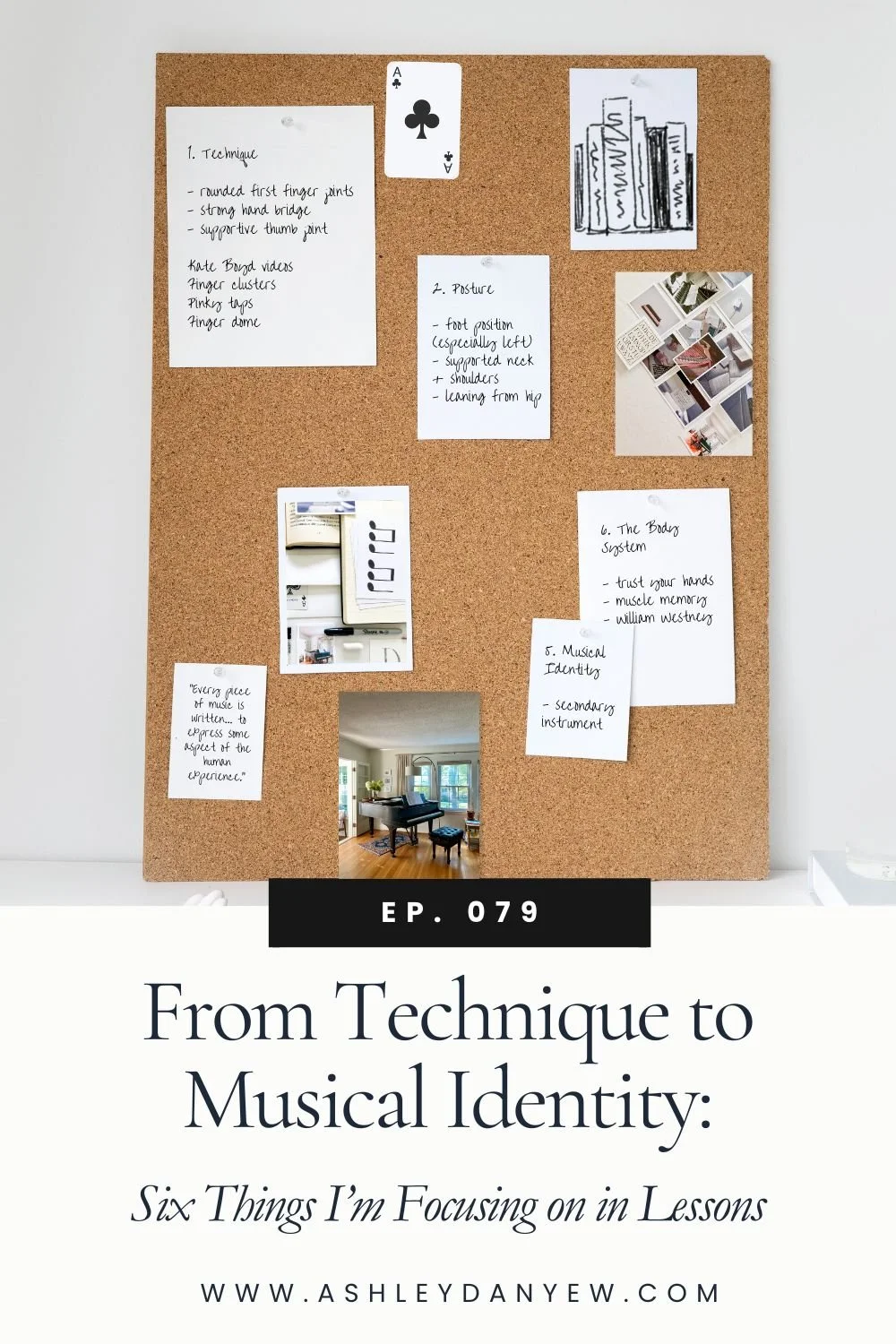
Happy January!
I hope you had a restful teaching break and that you’re ready to dive back in with renewed energy, creativity, and motivation.
The Spring semester can be busy. In my studio, we have informances in March (which you heard me talk about last year—see episodes 068, 069, and 071), our state Solo Festival in May, and our annual year-end recital in June, plus 2-3 studio classes for each group (which ends up being 13 or so, for me) and of course, weekly lessons.

It’s the middle of December, which means you’re probably caught up in the rush of holiday performances, concerts, and recitals, studio classes, parties, and general busyness as we wrap up the year. Your to-do list is long, but the days are short, and you’re doing your best to stay on top of it all.
But as busy as this time of year is, it can also be a time to pause and reflect. To embrace the quiet and stillness that comes with the first snowfall or sitting in the living room late at night or early in the morning by the light of the Christmas tree.
As a teacher, December is a time to acknowledge everything you’ve created and accomplished this year—everything you’ve learned and all the ways you’ve changed and grown and evolved as a musician and educator.

I have a love/hate relationship with studio classes.
I love the idea of them, and I love being able to offer them to my students. But I’ve never found a structure or approach that works.
At the school where I teach, I’m limited to a classroom with a single piano, which means students have to take turns or do activities that don’t involve an instrument.
In addition, having a group of 6-8 students in a room together for 45-60 minutes (again, with one instrument) was challenging. It’s difficult to keep everyone engaged and focused, give directions, facilitate meaningful learning activities, and assess each student individually.
As an introverted teacher, it can feel a little chaotic and overwhelming.

It’s my second full week of teaching. I know some of you have been back to school and lessons for a month now, but I’m still getting my bearings, adjusting to a new schedule, organizing studio classes, and setting my intentions for the year.
This is not a formal practice, but it’s something I sort of subconsciously do to mark the beginning of the new teaching year. Today, I’m sharing 7 things to carry into the new teaching year, and I hope this inspires you on your teaching journey.

I don’t know about you, but this summer is going by very quickly. I know some of you may be going back to school this week or preparing to go back in a few weeks; here in New York, we still have a little summer left, as we don’t start back until after Labor Day.
But regardless, it’s quick.
At the beginning of the summer, I made a list of 5 things I wanted to work on outside of teaching. In this episode, I’ll share what was on that list, how it’s going so far, and what I’m spending time on this month.
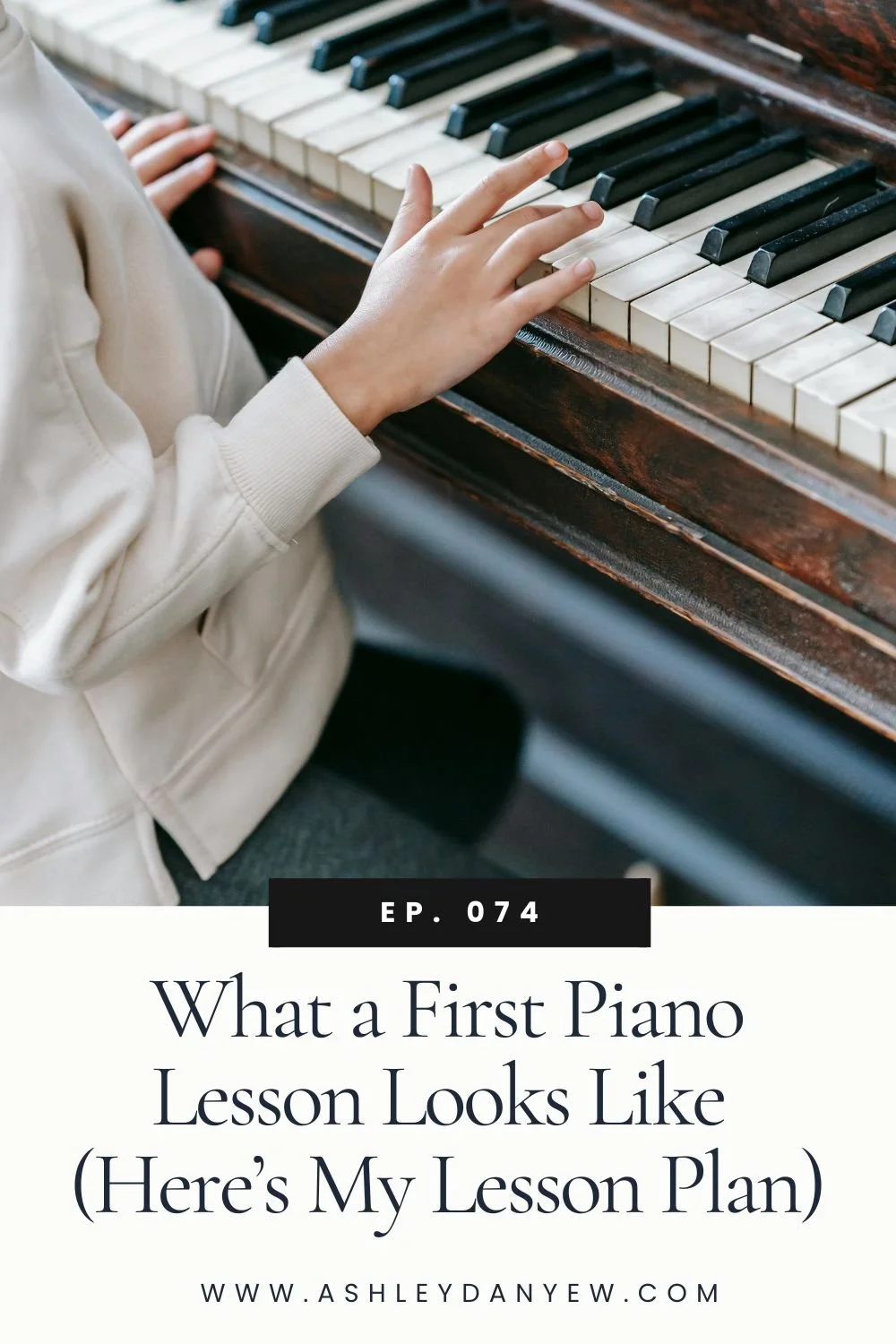
Last week, I taught a brand-new beginner her very first piano lesson.
Cora is 5 1/2 and is mature for her age. She is the youngest of three - her two older brothers also study with me. In fact, the oldest started with me when he was 5, a few weeks after Cora was born, so it’s kind of a full-circle moment.
I love starting beginners in the summer, before the beginning of the new school year because it’s less chaotic. This gives us a few weeks to get into the rhythm of lessons and playing at home so that routine is already established by the time school starts.
A friend of mine from college reached out to ask about how to find a piano teacher for her two young children:
"Any pointers on how to find the right person?" she asked in a DM. "Do you think going to a school is better or finding someone to come to us is better?"
The interview process for finding a music teacher goes both ways:
The teacher is interviewing the student and family to assess musical, physical, and emotional readiness; determine if the student (and parents) have the same goals for musical study; and evaluate whether or not they'd be a good fit in the studio. We talked about this in the last episode, Ep. 072 - The Case for Consultations in the Music Studio. So, go back and listen to that, if you missed it.
At the same time, the student (and often the parents) are interviewing the teacher to assess musical skills and qualifications, teaching style, method and curriculum choices, and extracurricular offerings.

Years ago, I received an email from a piano teacher asking about initial consultations and interviews.
“What do you do? What questions do you ask? How long should it be? What materials do you give them?” These are great questions!
Here are some of the reasons I offer consultations to prospective families in my studio:
They give you an opportunity to meet prospective students (and their parents) face-to-face before either of you commit to lessons.
For students who are transferring from another teacher, it's important to see what music they're currently working on, assess what they know, and determine where you want to begin in your first lesson.
In this episode, you’ll learn how to structure a prospective student consultation (including what to have the student bring or prepare ahead of time), six questions to ask, how to plan your time together, and how to onboard new students and families after the consultation.

Welcome to another episode of the Field Notes on Music Teaching & Learning podcast. Today’s episode is part 3 of a series I’ve been working on this spring all about how to plan and organize a musical informance.
I first mentioned the idea of a musical informance in Ep. 068. An informance is basically an informal performance or an informational performance where you share insight into the music and the learning process with the audience. In Ep. 068, I shared a few examples of musicians who exemplified this model of education and engagement in the past, talked about what separates an informance from a performance and how you could structure this in your studio, and shared how my students and I were preparing for this event.
In Ep. 069, I talked more specifically about the theme of our informances this spring—music to celebrate the Total Solar Eclipse happening here in Rochester. I shared my repertoire list, the questions I asked my students as they prepared, how I built in opportunities for student creativity and input, and how I organized the event with parents and families.
Today, I’m sharing how it all went including three things I learned, what went well, and what I would do differently next time.

The birds are chirping, the first Spring flowers are popping up in the front yard, and Rory, my dog, insists on laying in the middle of the daffodil bed whenever the sun is out.
These are my seasonal cues that it's time to start planning for our annual end-of-year studio recital. To give you a little context, I think I've mentioned before that I teach at a private school. It's nursery through 12th grade and I teach in the after-school program. Most of my students attend this school, so having our recital on-site is easy and convenient for everyone (and it gives us an opportunity to practice on the piano in the space during our lessons a few weeks ahead of time, which is helpful).
It started with an aspiration: “I want to get back into regular practicing,” I said to Steve one day. “But without a performance commitment, it’s hard to justify the time. What’s the point?” “There doesn’t need to be a point,” he said simply. “Do it for you. I think you’d enjoy it.”
In that moment, I gave myself permission to start: A recommitment, a new routine, an artistic practice.