
100 - When Stella the Steinway Turned 100

Resources Mentioned
*Disclosure: some of the links in this episode are affiliate links, which means if you decide to purchase through any of them, I will earn a small commission. This helps support the podcast and allows me to continue creating free content. Thank you for your support!
Penny Petticrew and the Magical Motives (Andrea Dow)
“Clog Dance” from Scandinavian Suite, Op. 13 (Howard Hanson)
”L’enfant Sage” from 6 Petites Pièces, No. 14 (Charlotte Sohy)
“Soliloquy” (John Ireland)
“Stella the Steinway’s 100th Birthday” (Piano Magazine)
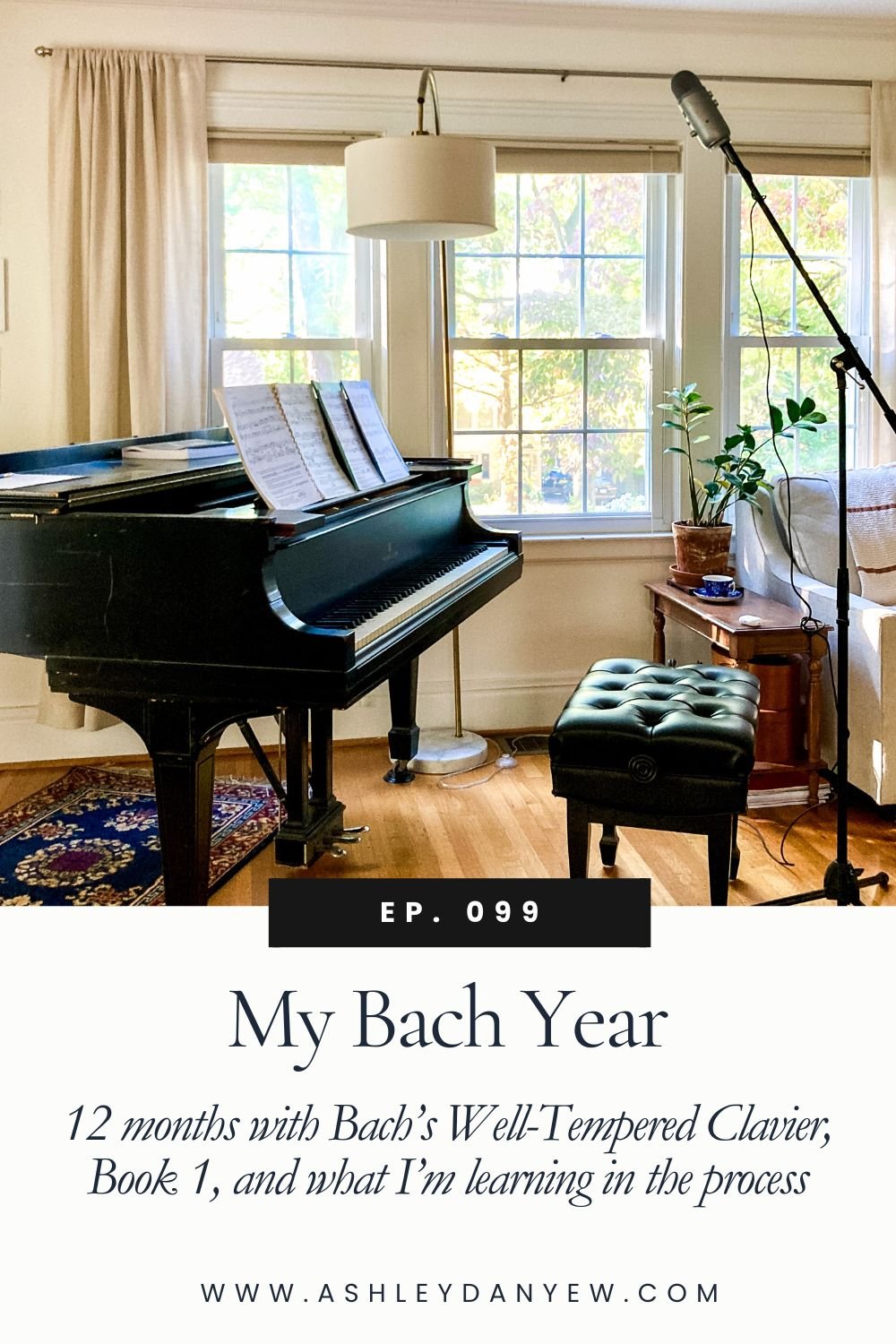
I named my piano Stella the Steinway. The name came to me one summer night during the pandemic, in a Zoom lesson with Annabelle, a curious, imaginative 8-year-old.
We were working through Andrea Dow’s Penny Petticrew and the Magical Motives, a composition storybook. At the end of the book, after adopting a host of pets and writing songs for each of them, Penny discovers her piano is the best pet of all. This inspired Annabelle to “adopt” her digital keyboard. “Yolanda the Yamaha,” she called her. “What’s your piano’s name?” she asked that night, cocking her head at the laptop camera. “Stella the Steinway,” I said with a smile.
Yolanda greeted Stella at the beginning of every Zoom lesson after that. We compared the number of keys, dynamic control, and the number of pedals. Annabelle and Yolanda became friends and musical collaborators in practice, composition, and performance. That fall, Annabelle improvised a Halloween rap starring Yolanda (wearing a witch hat), and our pianos wore matching Santa hats during the holidays.
I have owned Stella, a 1922 Model O Steinway, for 11 years. Her previous owner was a classical pianist and teacher who crated and moved the piano across the Atlantic when she came to the States. (There’s a cosmetic crack along the flat side of the cabinet and around the tail that we think was from this excursion.)
In 2022, I thought of a unique way to celebrate the piano’s 100th birthday: A program of piano music written or published in 1922, the year the piano was built.
I searched for relevant repertoire on IMSLP: music by Erik Satie, Cécile Chaminade, Harry T. Burleigh, George Gershwin, and Florence Price, among others. In the end, I chose three pieces to learn and record:
“Clog Dance” from Scandinavian Suite, Op. 13 by Howard Hanson
“Soliloquy” by John Ireland
“L’enfant sage” from 6 Petites Pièces, Op. 14 by Charlotte Sohy
That summer, I recorded the program in my living room. I wrote about the project for Piano Magazine in the Winter 2023 issue (Vol. 14, No. 4)—you can find that article at pianoinspires.com. In this, my 100th podcast episode, I’m revisiting the project and sharing the recordings I made in honor of Stella’s 100th birthday.
Music Written in 1922
“Clog Dance” by Howard Hanson
I was genuinely excited to discover a piece by Howard Hanson, published in 1922. Hanson was an American composer and conductor and the second director of the Eastman School of Music (my alma mater). He spent a good part of his career here in Rochester and at Eastman, so it seemed fitting to include his composition in this project.
I learned that he was born in Nebraska to Swedish-American parents, which makes sense, given the title and musical characteristics of this piece. It has a primitive, early American sound, augmented by a Phrygian melody, chromaticism, and scattered accents throughout. Hanson included a few character notes in the score: “more heavily,” “clumsily,” and “with fire.”
Here’s my recording of “Clog Dance.”
“Clog Dance” by Howard Hanson, performed by Ashley Danyew on a 1922 Model O Steinway piano
“L’enfant sage” by Charlotte Sohy
Charlotte Sohy was a French composer and pianist. She married composer Marcel Label, and they collaborated throughout their careers. This resonated with me, a pianist married to a composer, and we, too, have collaborated as performers and writers in our careers.
Her name in the score is written “Ch. Sohy,” which I learned was a way to conceal her gender. She wrote this collection of short piano pieces in 1922. I played through all of them before settling on the first, “L’enfant sage” (“Wise child”)—a simple piece that feels childlike with its two-part texture in the upper register. After a few measures, the music shifts from C major into the parallel minor, which adds a sense of melancholy.
Here’s my recording of “L’enfant sage.”
“L’enfant sage” by Charlotte Sohy, performed by Ashley Danyew on a 1922 Model O Steinway piano
“Soliloquy” by John Ireland
I was familiar with John Ireland before this project, but I’m not sure I’d ever played any of his solo piano music. He wrote in the English impressionist style and was influenced by Debussy and Ravel (two of my favorites), as well as the early works of Stravinsky and Bartók. He was working as a church musician when he wrote “Soliloquy” in March 1922.
A soliloquy is “the act of talking to oneself.” You can hear this through Ireland’s use of short phrases, breaths and pauses, and four instances of playing the same single note. This static moment functions as both reflection and reset—almost as if you can feel the mind wandering and then refocusing.
Here’s my recording of “Soliloquy.”
“Soliloquy” by John Ireland, performed by Ashley Danyew on a 1922 Model O Steinway piano
Four Takeaways for Music Teachers
As teachers, we may not take the time to learn and perform music for our own enjoyment, especially without a performance requirement. But I’ve learned it’s important to stay connected to the art of music-making—to continue learning about music and how it’s made. Four things to take away from a project like this:
Give yourself a reason to be a learner. Sometimes we wait to be asked or invited, or for a good opportunity to present itself. But sometimes, you have to give yourself permission to start. Make your own routine, create your own project, choose your own music. Don’t wait for someone else to give you a reason. If it’s something you’re interested in, go for it.
Make time to practice, just for you. Finding time to practice helped me better relate to my students. Sometimes I found myself reading through the pieces without stopping to identify challenge spots or practice a difficult passage slowly. I had to remind myself of all the practice strategies I share with my students and discipline myself to really practice.
Take time to discover new repertoire. Even with a small project like this one, I uncovered pieces (and composers) that I had never played before. I was reminded that there’s so much music to discover and explore (past and present).
It doesn’t stop at performance. Studying these pieces sparked my curiosity to learn more about the composers’ lives, careers, and creative influences, listen to recordings, and analyze the scores. To encourage this sense of curiosity in our students, we need to model that learning goes beyond performance.
Closing
Happy 100th episode, friends! Thank you for listening and following along, for the kind reviews and comments, and for the ways you support my work. I hope that sharing about this project inspires you to continue learning, no matter where you are in your career. Keep looking for ways to challenge yourself, engage your creative musicianship, develop a new skill, or expand your perspective.


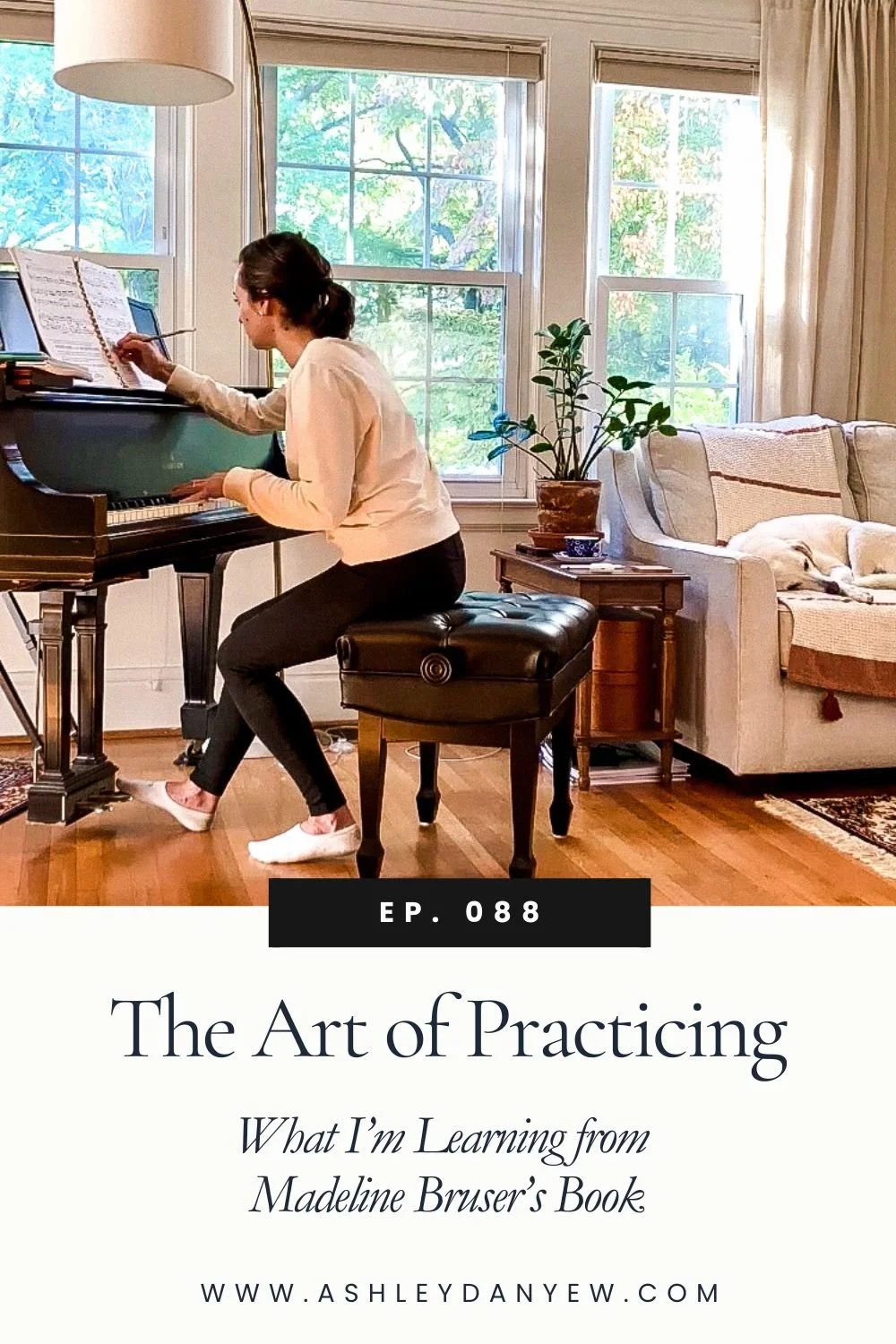






I named my piano Stella the Steinway. The name came to me one summer night during the pandemic, in a Zoom lesson with Annabelle, a curious, imaginative 8-year-old.
I have owned Stella, a 1922 Model O Steinway, for 11 years. In 2022, I thought of a unique way to celebrate the piano’s 100th birthday: A program of piano music written or published in 1922, the year the piano was built.
In this, my 100th podcast episode, I’m revisiting the project and sharing the recordings I made in honor of Stella’s 100th birthday.